
More Guides
Look at the back of most loudspeakers and you will find a tube, or an opening on the front baffle beneath the woofer. Look at others and you will find nothing at all. That difference — ported versus sealed — is one of the most consequential decisions a speaker designer makes, and it changes how the speaker behaves in your room in ways that are entirely predictable once you know what each alignment is doing. Neither is better. They are different trades, and one of them will suit your room better than the other.
What a Sealed Box Does
A sealed enclosure — also called acoustic suspension — is exactly what it sounds like: an airtight box with the driver mounted in the front. The air trapped inside acts as a spring, and that spring is a large part of the driver's total restoring force. Only the front of the cone radiates into the room; the rear output is absorbed and dissipated inside the cabinet.
The acoustic consequence is a gentle low-frequency roll-off of about 12 dB per octave below the system resonance. That is a shallow slope by loudspeaker standards, and it means a sealed speaker does not stop producing bass at a cliff edge — output continues below the nominal cutoff, quietly but usefully. It also means the phase behaviour through the bass is comparatively simple, and the group delay — how much the low frequencies are smeared in time relative to the rest — is low.
The cost is efficiency and extension. Because the rear radiation is thrown away, a sealed box needs more power and usually a larger cabinet to reach a given depth at a given level than a ported one.
What a Port Does
A bass reflex enclosure adds a tuned opening. The mass of air in the port and the compliance of the air in the box together form a resonator, tuned to a specific frequency — the port tuning frequency. Around that frequency, the port radiates in phase with the driver, adding output that would otherwise have been wasted inside the box.
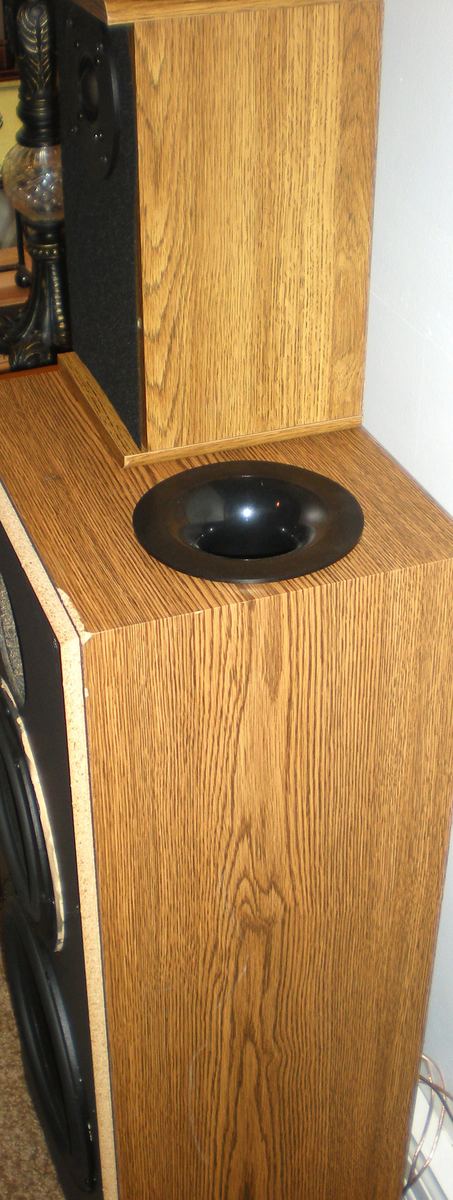
The gain is substantial: typically 3 dB or more of extra output around tuning, and useful extension perhaps half an octave lower than the same driver and box sealed. Below tuning, however, the behaviour changes sharply. The port output falls out of phase with the driver, the two begin to cancel, and the roll-off steepens to about 24 dB per octave. Below tuning the box also stops loading the driver, so cone excursion rises rapidly — which is why a ported speaker fed with heavy subsonic content can flap alarmingly.
Deeper and Louder, or Gentler and Better Behaved
A ported design buys extension and efficiency: more output, lower, from the same driver and box size. A sealed design buys a shallower slope, lower group delay and better behaviour below cutoff. Everything else in this comparison follows from those two sentences — including, crucially, how each behaves once a room adds its own bass reinforcement.
Group Delay and the "Tight Bass" Question
The claim that sealed bass sounds "tighter" and ported bass "slower" is widespread, frequently overstated, and rooted in something real. Any resonant system stores energy and releases it slightly late; the steeper the filter, the more phase shift and the greater the group delay near cutoff. A ported alignment is a higher-order system, so it has more group delay in the region around and below tuning than a sealed one.
Whether that is audible is genuinely debated, and the honest answer is that it is a small effect at typical tunings and hard to isolate from the far larger frequency-response differences between two speakers. What is much less debatable is the behaviour below tuning: a sealed speaker rolls off gracefully and keeps control, while a ported one loses both output and cone control quickly. Much of the perceived difference in bass quality comes from that, and from how each interacts with the room, rather than from group delay alone.
How the Room Changes the Answer
This is the part that decides most real choices, and it is why the same speaker can be excellent in one room and unlistenable in another.
Small and medium rooms provide room gain: below the frequency where the room's dimensions stop supporting wave behaviour, pressure builds and low frequencies are reinforced, often by several decibels per octave as frequency falls. A sealed speaker's gentle 12 dB/octave roll-off can be partly cancelled by that gain, producing bass that extends smoothly and deeply in-room even when the anechoic specification looks unimpressive. A ported speaker's 24 dB/octave slope is too steep for room gain to fill in, so what you get below tuning stays gone — while the boost around tuning can combine with a room mode to produce a pronounced hump.
The practical pattern: sealed alignments tend to integrate more forgivingly in small rooms and near boundaries, while ported alignments reward larger rooms and careful placement where their extra output can be used without exciting a mode.
Placement, Port Position and Chuffing
Where the port sits changes how much freedom you have. A rear-firing port close to a wall gets loaded by that boundary, which typically thickens the midbass and can make port noise more audible; rear-ported speakers generally want space behind them. A front-firing port is much less sensitive to wall proximity, which is why it is common on speakers designed to live on a shelf or close to a wall. A downward-firing port into a plinth splits the difference and is largely placement-neutral.
Ports also have a velocity limit. Push enough air through a port and the flow becomes turbulent, producing an audible chuffing or wind noise on heavy bass. Designers mitigate this with larger, flared ports, but a small port on a compact speaker driven hard will eventually make itself heard. Sealed boxes have no equivalent failure mode — they simply compress and distort as excursion rises, which is usually less obtrusive.
Port bungs are a legitimate tool. If a rear-ported speaker must sit near a wall and sounds boomy, plugging the port converts it to a (non-optimal) sealed alignment: you lose output around tuning and some extension, but you gain a gentler slope and less boundary interaction. Foam plugs supplied by the manufacturer are designed for this. Partial plugging is also worth trying — it shifts tuning down and reduces port output without fully sealing the box.
Passive Radiators: A Third Option
Some speakers use a passive radiator instead of a port — an undriven cone, with its own mass and suspension but no motor, mounted in the cabinet. Acoustically it does the same job as a port, forming a resonant system with the box air, and produces a broadly similar fourth-order alignment.
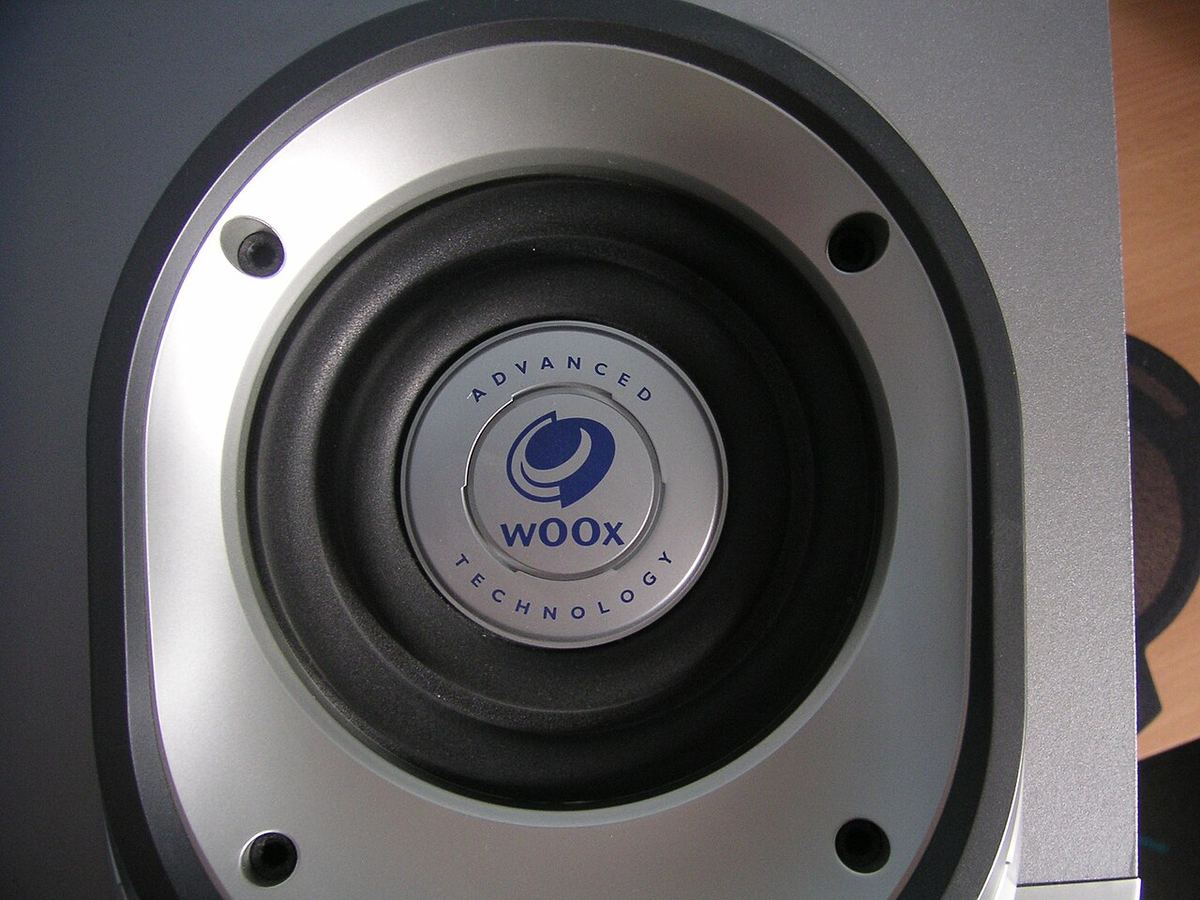
Its advantages are practical: it eliminates port noise entirely, and because tuning is set by the radiator's moving mass rather than by a tube's length, a designer can achieve a low tuning frequency in a cabinet far too small to accommodate the port it would otherwise need. That makes passive radiators common in compact and wireless speakers. The trade-offs are cost, a resonance of the radiator's own that must be kept out of the way, and a slightly less clean roll-off in some implementations.
Choosing Between Them
The decision comes down to the room, the volume you play at, and what you intend to do about bass overall.
- Choose sealed if your room is small, if the speakers must sit reasonably close to a wall, if you value even, controlled bass over maximum extension, or if you plan to add a subwoofer and want a smooth handover.
- Choose ported if the room is medium or large, if you want the deepest bass a given cabinet size can deliver, if you play at higher levels, or if you have the freedom to position the speakers away from boundaries.
- Consider a passive radiator where you want reflex-style extension from a small cabinet and want to avoid port noise.
- Do not choose on alignment alone. The frequency response, dispersion and driver quality of a specific model matter far more than which of these three categories it falls into.
One final note for subwoofer owners: if you are crossing over at 80 Hz, the main speakers' alignment below that point stops mattering almost entirely, and the choice reverts to whichever pair sounds better through the midrange. The alignment argument applies most strongly to speakers running full-range.
Port Tuning in Numbers
A port's tuning frequency follows the Helmholtz resonator formula, which depends on the port's cross-sectional area, its effective length and the volume of the box. A worked example shows the proportions involved. A 20-litre cabinet with a port 5 cm in diameter and 15 cm long tunes to roughly 40 Hz, allowing for the extra effective length the air mass gains at each end of the tube.
Lowering the tuning is expensive in space. Doubling the port length to 30 cm brings the tuning down only to about 30 Hz, and the tuning frequency falls with the square root of length, so each further step costs more tube. Making the port narrower would shorten it, but a narrow port raises air velocity and brings on chuffing sooner. That conflict is why small speakers with deep tuning often use folded or slot ports, or turn to passive radiators, which achieve a low tuning without a long tube.
Reading the Bass Specification
Manufacturers quote low-frequency limits in different ways, which makes cross-brand comparison treacherous. A figure such as “45 Hz–20 kHz ±3 dB” is meaningful; “35 Hz (−6 dB)” describes a deeper point on a similar curve; and a bare “30 Hz–25 kHz” with no tolerance may be the −10 dB point or simply optimistic. Because a ported speaker's response falls so steeply below tuning, its −3 dB and −10 dB points sit close together; a sealed speaker's gentler slope spreads them further apart, which is part of why sealed designs often sound deeper in a room than their specification suggests.
For sealed designs, the system's Q describes the shape of the roll-off. A Q of about 0.5 gives a slow, very well-damped roll-off; around 0.7 gives the flattest response with no peak; and values approaching 1 or above produce a small bass hump just before roll-off, which can sound fuller but less controlled. Most well-regarded sealed designs sit in the 0.6–0.8 range.
The Same Trade in Subwoofers
Subwoofers face exactly the same choice, with higher stakes because they do all the deep bass work. A ported subwoofer delivers more output in the bottom octave for a given amplifier and driver, at the cost of a larger cabinet and the same steep roll-off below tuning. A sealed subwoofer is smaller for its driver, rolls off gently, and benefits strongly from room gain in small and medium rooms, but it needs more amplifier power and driver excursion to match a ported design at the lowest frequencies.
Several subwoofers supply port plugs and switchable modes so the owner can choose, typically trading the deepest output for tighter behaviour and greater excursion protection when sealed. For home cinema at high levels in a large room, ported subwoofers make the most of their size; for music in a smaller room, sealed subwoofers integrate easily and are much easier to place.
Quick Reference: Sealed vs Ported
| Property | Sealed | Ported |
|---|---|---|
| Roll-off slope | ~12 dB/octave | ~24 dB/octave below tuning |
| Extension for a given box | Less | Roughly half an octave deeper |
| Efficiency around cutoff | Lower | ~3 dB or more higher near tuning |
| Group delay near cutoff | Lower | Higher |
| Below cutoff behaviour | Controlled; excursion limited by box | Unloaded; excursion rises quickly |
| Room gain interaction | Gentle slope blends well with room gain | Steep slope; room gain cannot fill it in |
| Near-wall placement | More tolerant | Rear ports need space; front ports tolerate walls |
| Noise failure mode | Compression and distortion | Port chuffing at high output |
Match a speaker to your room
Enter your speakers and room dimensions for a free analysis of bass loading, likely modal problems, and how the cabinet alignment will behave where you listen.
Run a Free Analysis →