
More Guides
The choice between a pair of stand-mounted bookshelf speakers and a pair of floorstanding towers is one of the first big decisions in building a system, and it is surrounded by more assumptions than almost any other. The tower looks like the grown-up option and the bookshelf like the starter kit you upgrade away from later. That framing is wrong often enough to be worth dismantling. The two formats are not a good-and-better pair; they are different tools that trade the same handful of qualities against each other. Once you see which qualities are actually being traded, the decision stops being about status and starts being about your room, your volume, and your budget.
The Physical Difference That Drives Everything
Strip away the marketing and a loudspeaker's low-frequency ability comes down to two physical realities: how much air the drivers can move, and how much internal cabinet volume sits behind them. A floorstander is tall because that height buys internal volume and usually a larger — or additional — bass driver. A bookshelf is small because it is meant to sit on a stand or shelf, which caps both the cabinet size and the driver area a designer can work with.
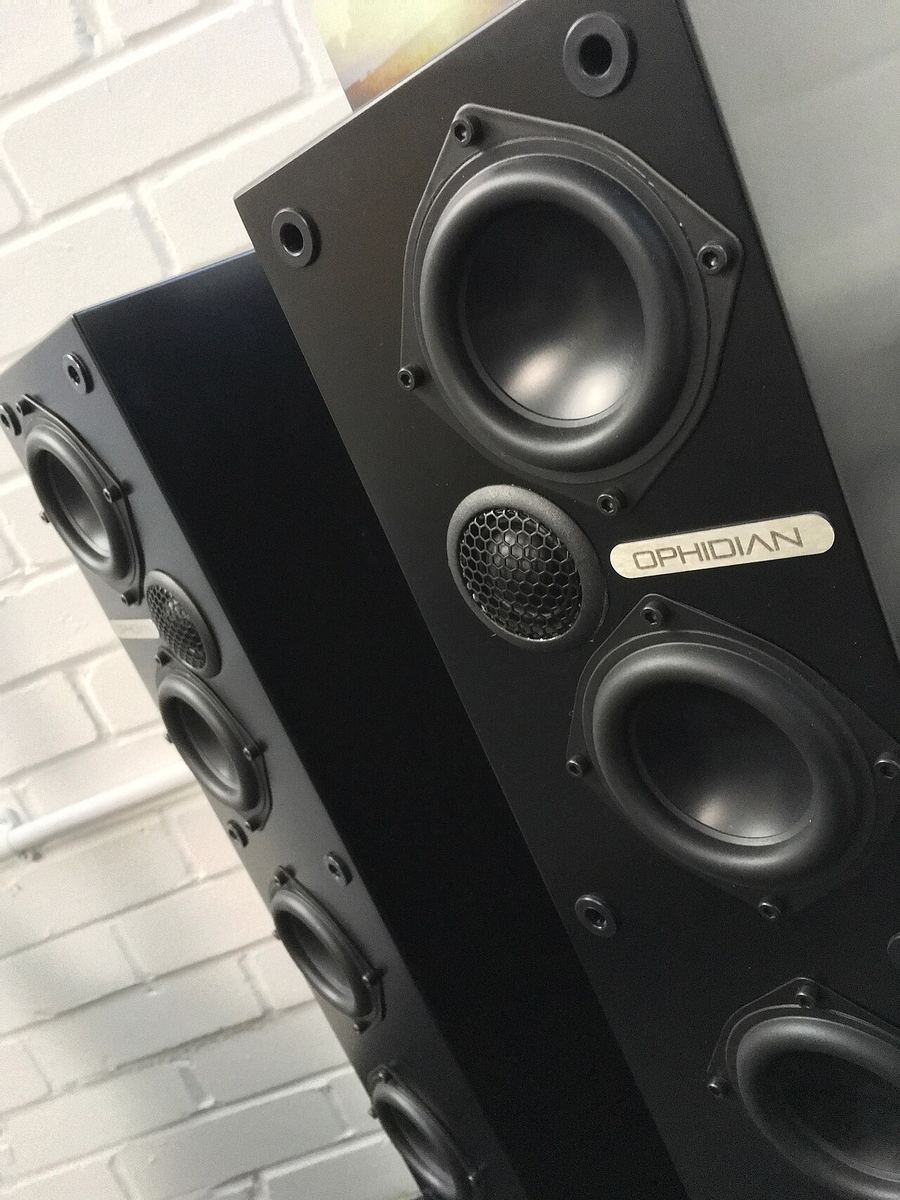
Those two variables set the ceiling on deep bass. A bigger enclosure lets a woofer move freely and stay loaded at low frequencies, and more cone area shifts more air per stroke, which is what you feel as bass weight and effortless volume. This is not a subtle engineering preference — it is basic physics, and it is the single honest reason a well-designed tower can do things a same-price bookshelf cannot. Everything else in this comparison is a consequence of, or a workaround for, this one difference.
Bookshelf (Stand-Mount) Speakers
A compact two-way enclosure — typically a mid-bass driver of 4 to 7 inches paired with a tweeter — designed to sit on a stand at ear height. Small internal volume limits how deep the bass reaches, with most models rolling off somewhere between roughly 50 and 60 Hz. In exchange they are easier to place, throw a precise stereo image, disappear more readily in a small-to-medium room, and cost less for a given level of driver quality. The catch is that the stands they need are a real, often overlooked, part of the price.
Floorstanding (Tower) Speakers
A tall, floor-standing cabinet with more internal volume and usually two or more bass drivers stacked below the tweeter. The extra enclosure and cone area push usable bass lower — commonly into the 35 to 45 Hz region on capable designs — and let the speaker play louder without strain in a bigger space. They need no stands, but they demand floor space, sit closer to the ground where room modes bite hardest, and reward careful distance from the walls behind and beside them.
Bass Extension, Sensitivity, and Room Loading
The headline spec people chase is bass extension — how low the speaker plays before its output falls away. Towers generally win this outright, and if you want the bottom octave from the speakers alone, a floorstander is the direct route. But two things complicate the simple "towers go deeper" story, and both matter.
The first is the room itself. Small rooms reinforce bass through what is loosely called room gain: the enclosed space pressurises and lifts the lowest frequencies, so a modest bookshelf can sound fuller in a small room than its on-paper roll-off suggests. A large open-plan space does the opposite — it swallows bass, and a bookshelf that measured fine in a shop can sound thin once it is fighting all that volume. The same physics that makes towers unnecessary in a tiny room makes them close to mandatory in a big one.
The second is sensitivity, which describes how much sound pressure a speaker produces for a given amount of amplifier power. Towers, with more driver area, are frequently a few decibels more sensitive than comparable bookshelves. A 3 dB difference is meaningful — it is the difference between an amplifier delivering, in effect, half the power for the same loudness. In a large room or with a modest amp, that efficiency edge is a genuine practical advantage, not a spec-sheet footnote.
Bigger is not automatically better. A tower only earns its extra bass if the design spends its budget well. A cheap floorstander often stretches the same parts list over a bigger box, producing loose, one-note bass and a thinner midrange than a well-sorted bookshelf at the same price. A good stand-mount plus a subwoofer routinely beats a mediocre tower — the money simply goes further when the deep-bass job is handed to a purpose-built box.
Placement, Stands, and Room Size
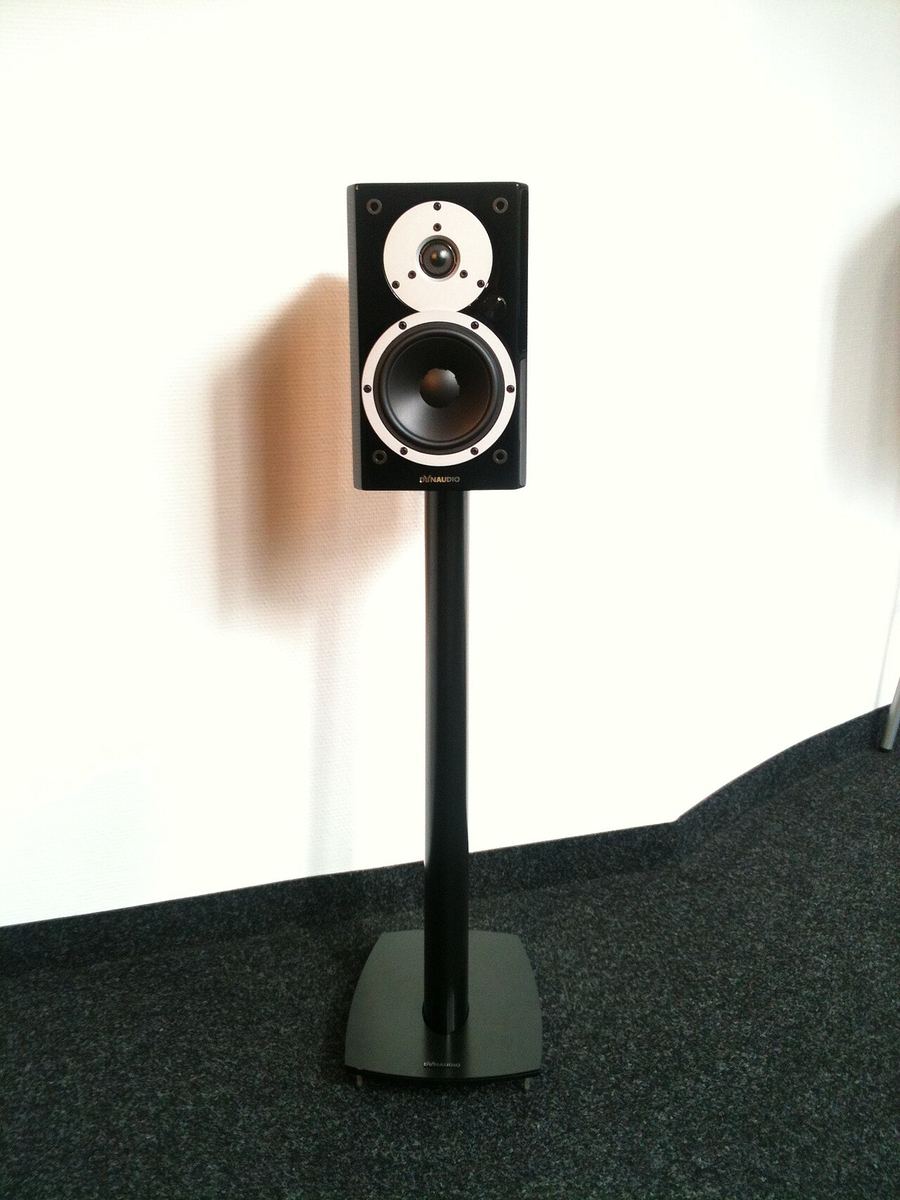
Placement is where the two formats swap advantages in ways the price tag never shows. A bookshelf on a proper stand puts its tweeter at ear height and its cabinet away from the floor, which tames one whole class of reflection problems and helps it image cleanly. But that stand is not optional — a good pair costs real money, takes real floor space, and if you skip it by shoving the speaker on a bookshelf or sideboard, you throw away much of the imaging and neutrality you paid for. Budget for stands as part of the speaker, because functionally they are.
Floorstanders arrive with their own stand built in, which is genuinely convenient, but they trade that for fussier positioning. Sitting on the floor, they couple more strongly to floor and wall boundaries, so their bass is more sensitive to how far they sit from the wall behind them. Push a ported tower hard against a wall and the bass can turn boomy and thick; pull it out and give it breathing room and it tightens up. In a small or furniture-crowded room, that need for space around each speaker can be the deciding practical factor.
Stands Are Part of the Bookshelf Price
A pair of solid, appropriately heavy stands is not an accessory — it is structural to how a bookshelf speaker performs. Rigid, mass-loaded stands at the right height stop the cabinet from wobbling, place the tweeter on-axis with your ears, and let the speaker image the way its designer intended. Factor that cost in before you conclude a bookshelf is dramatically cheaper than a tower: once you add good stands, the price gap narrows, and sometimes closes entirely.
Output, SPL, and Pressurising a Room
Beyond how low a speaker plays is how loud it can play cleanly, and how large a space it can fill. This is about maximum sound pressure level (SPL) and, underneath it, the sheer volume of air the speaker has to energise. Filling a small room to a satisfying level asks very little; filling a large, open living space to the same subjective loudness asks for far more air movement, and that is exactly where cone area and cabinet volume tell.
A bookshelf pushed hard in a big room runs out of clean output — the bass compresses, the drivers reach their limits, and the sound hardens as you turn up. A tower has more headroom precisely because it moves more air with less effort from each driver, so it stays composed at volumes that would have a bookshelf straining. If you listen loud, watch films at reference-ish levels, or simply have a lot of cubic feet to pressurise, that headroom is one of the clearest reasons to choose a floorstander.
The Bookshelf-Plus-Subwoofer Alternative
The most quietly powerful option in this whole comparison is not a tower at all: a pair of quality bookshelves paired with one or two subwoofers. This combination sidesteps the tower's core compromise. The bookshelves handle the midrange and treble — the range where imaging and clarity are decided — while a dedicated subwoofer, built from the ground up to move air at low frequencies, takes over the deep bass a small cabinet cannot manage.
The advantages are real and often underrated. A subwoofer can be positioned independently of the main speakers, which means you can place the bookshelves where they image best and place the sub where the room's bass behaves best — two different problems solved separately, which is impossible with a full-range tower whose bass and imaging are welded to one location. You also gain bass that frequently reaches lower and hits harder than any similarly priced pair of towers. The trade-offs are the extra box, a mains outlet for it, and the setup time to blend the subwoofer's crossover, level, and phase so the handover is seamless. Done well, this is the arrangement that beats towers at their own game in a great many rooms.
Bookshelves + Subwoofer
Small mains for clean, well-placed imaging plus a dedicated subwoofer for the bottom two octaves. It typically outperforms a same-price tower on outright bass depth and gives you independent placement of the sub, so room modes can be dodged rather than endured. The cost is one more box, a power outlet, and the patience to integrate the crossover and level. For music-and-movies rooms of most sizes, it is the value-and-performance sweet spot.
Value, Cost, and Floor Space
On the shelf, bookshelves almost always carry the lower price, but the honest cost comparison has to include what each format really needs. Add good stands and the bookshelf's advantage shrinks. Add a subwoofer and its total can approach or pass a tower's — while usually beating that tower on bass. Towers need no stands but claim floor space you might not have, and in a room where that footprint matters, the smaller speaker is cheaper in the currency that actually constrains you: space.
There is also a resale and flexibility angle. Bookshelves are easier to move, rearrange, and re-home, and a subwoofer bought once can follow you through several speaker upgrades. Towers are a more committed purchase in every sense — physically heavier to live with and to sell. None of this makes either format the value winner outright; it means the value question only has an answer once you name your room size, your volume habits, and whether you are prepared to run a subwoofer.
A Simple Decision Framework
Rather than asking which format is better, match the format to your situation:
- Small room (up to roughly 150 sq ft), near-field or moderate volume: Bookshelves on stands are usually the smarter buy. Room gain fills in much of the low end, imaging is superb, and you avoid overloading a small space with more bass than it can control.
- Medium room, music-focused, wants deep bass: Either a capable tower or bookshelves plus a subwoofer. If you value clean placement and flexibility, take the hybrid; if you want the simplicity of two boxes and have the floor space, take the tower.
- Large or open-plan room, plays loud, movies included: Lean toward floorstanders for their sensitivity and headroom, and consider adding a subwoofer on top for the bottom octave. This is the one scenario where a bookshelf alone will most often disappoint.
- Placement is constrained (walls close, limited floor space): Bookshelves are far more forgiving. A tower crammed against a wall rarely gives its best, whereas a small sealed or front-ported stand-mount tolerates tight placement much better.
- Best all-round value with deep bass: Quality bookshelves plus a subwoofer, nearly every time — provided you are willing to spend the setup time to integrate it well.
Quick Reference: Bookshelf vs Floorstanding
| Factor | Bookshelf (Stand-Mount) | Floorstanding (Tower) |
|---|---|---|
| Typical bass reach | Rolls off around 50–60 Hz | Often 35–45 Hz on capable designs |
| Sensitivity | Usually a little lower | Often a few dB higher — easier to drive loud |
| Max clean output | Runs out sooner in large spaces | More headroom; pressurises big rooms |
| Best room size | Small to medium; benefits from room gain | Medium to large and open-plan spaces |
| Placement | Forgiving; tolerates tighter spots | Fussier; wants distance from walls |
| Stands | Required — a real added cost | Built in; none needed |
| Floor space | Minimal (footprint is the stand) | Claims permanent floor real estate |
| Value path to deep bass | Add a subwoofer — often beats a same-price tower | Bass built in; simpler but pricier per octave |
Compare bookshelf and floorstanding models side by side
Put a specific bookshelf and tower next to each other to see how their bass extension, sensitivity, and amplifier needs line up against your room and gear.
Compare Speakers →