More Guides
Every measurement taken at a listening seat is the combined result of the loudspeaker's direct output and the room's contribution. Below approximately 300 Hz, room modes — resonances determined by the room's dimensions — dominate what you hear. Above that frequency, reflections from nearby surfaces and the listening position relative to the speakers determine the tonal balance and imaging. Speaker placement addresses both.
Bass Modes and the Rule of Thirds
Room Modes: Axial, Tangential, and Oblique
A rectangular room has resonant frequencies determined by its dimensions. The axial mode frequencies are given by: F = (n × 343) ÷ (2 × D), where n is a whole number (1, 2, 3…) and D is the room dimension in metres. A 5-metre room has a fundamental mode at 34.3 Hz and harmonics at 68.6 Hz, 102.9 Hz, and so on. At these frequencies, the room builds up standing waves — pressure nodes (nulls) and antinodes (peaks). The listening seat position within the room determines which modes are excited and at what level.
The rule of thirds places speakers at approximately 1/3 of the room's length from the front wall and the listening seat at approximately 1/3 of the room's length from the rear wall. These positions place the speakers and listener away from the pressure maxima at the room boundaries, reducing the severity of the dominant bass mode. It is a starting point, not a prescription — every room's dimensions and furnishings will require refinement by ear or measurement.
Before buying bass traps or a subwoofer: Move the listening seat 0.5–1 metre forward or backward. Bass response at the seat changes dramatically with position. A seat against the rear wall sits at a pressure antinode for all axial modes — the worst possible position for bass accuracy.
Speaker Boundary Interference Response (SBIR)
Floor, Side Wall, and Rear Wall Proximity
A speaker near a reflective boundary produces a reflected wave that interferes with the direct wave. At the frequency where the reflected path length is half a wavelength longer than the direct path, cancellation occurs. For a speaker 0.6 metres from the rear wall, this SBIR null appears at approximately 143 Hz — squarely in the upper bass and lower midrange. Moving the speaker closer to or further from the wall shifts the null frequency. Placing a speaker flush against a wall (closer than approximately 15 cm) moves the null above the speaker's useful bass range, which is why "boundary" or "shelf" speakers are designed to be used this way. Most freestanding speakers perform worst at an intermediate distance (0.3–0.8 m from the wall) due to SBIR.
The vertical SBIR from the floor is present in all speaker setups. Most stand-mount speakers are designed with their tweeter at ear height (approximately 90–100 cm seated) to minimise the audibility of floor reflections at the listening seat. Floor-standing speakers typically account for floor reflection in their crossover design. The most practical approach is to keep the speaker-to-rear-wall distance consistent between left and right channels, then adjust by ear.
First Reflection Points
Side Wall, Ceiling, and Rear Wall Reflections
The first reflections are the dominant source of early reflected energy at the listening seat. A single strong early reflection arriving 5–20 ms after the direct sound (corresponding to a path length difference of 1.7–7 metres) masks low-level detail and reduces stereo image precision. The side wall first reflection points are found by placing a mirror on each side wall; the reflection point is where you can see the speaker face from the listening seat. Rear wall reflections behind the listening seat are also significant for depth of image. Treatment options are absorption (reduces reflected energy at all frequencies) and diffusion (scatters reflected energy without removing it).
Toe-In and Listening Distance
Speaker Toe-In and the Listening Triangle
Toe-in — rotating the speakers inward toward the listening seat — affects both frequency response and stereo imaging. Many speakers are designed to be used with the tweeter axis aimed approximately at the listening position ("on-axis"), which typically gives the flattest high-frequency response. Some designs, particularly those with wide dispersion, are used with less or no toe-in, relying on the room for high-frequency integration. The equilateral triangle rule — where the speaker-to-speaker distance equals the speaker-to-listener distance — is a reasonable starting point for imaging. Reducing listening distance compresses the soundstage; increasing it widens the image but reduces stereo precision as the room contribution grows relative to the direct sound.
The listening distance also interacts with the speaker's crossover and dispersion. A speaker with a narrow vertical dispersion requires more precise seat height adjustment at closer distances. A speaker with high sensitivity and wide dispersion may image more effectively at greater distances where the room's contribution smooths minor frequency response variations.
Absorption vs Diffusion: When to Use Each
Choosing the Right Treatment
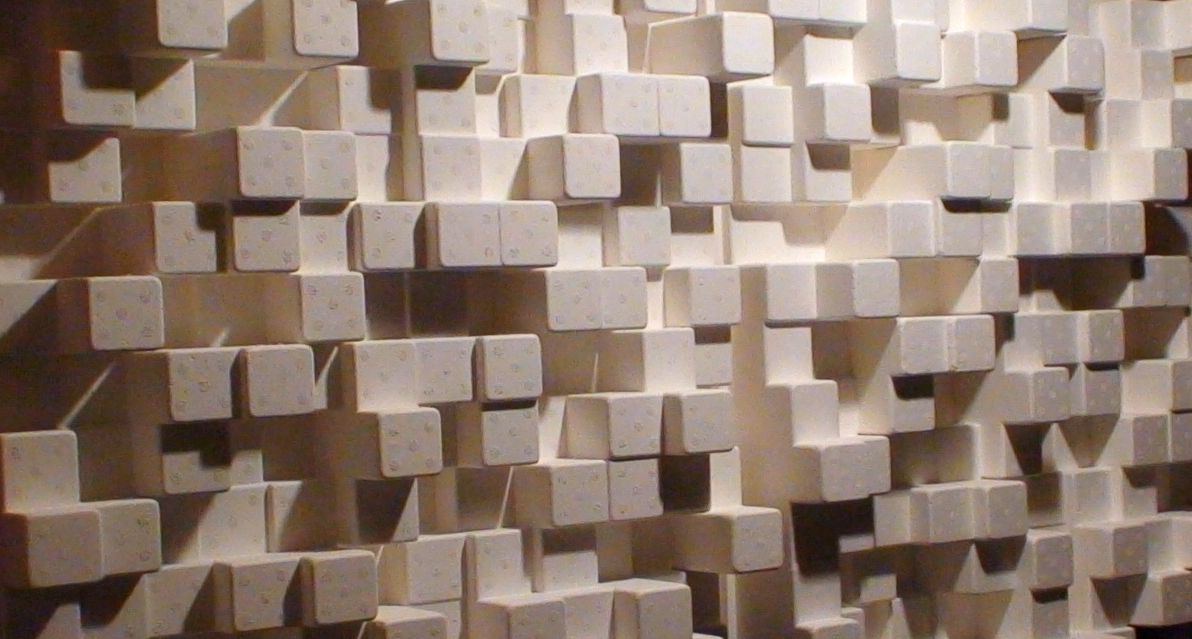
Absorption reduces reflected energy but also reduces liveliness. An over-absorbed room sounds dead, fatiguing, and small. Diffusion scatters reflected energy without removing it, preserving liveliness while reducing discrete echoes. The practical guideline for a domestic listening room: place absorption at the primary reflection points (side walls, ceiling first reflection) to reduce early reflections; use diffusion on the rear wall behind the listening seat to maintain spaciousness. Bass traps in corners address low-frequency modes that absorption panels (which are ineffective below approximately 200 Hz unless very deep) cannot treat.
Practical treatment in a domestic room need not be conspicuous. A bookshelf full of irregularly sized books makes an effective broadband diffuser. A large sofa with cushions provides significant low-frequency absorption. Floor rugs absorb high-frequency reflections from the floor between speaker and listener. Curtains over windows reduce glass reflections. Significant acoustic benefit is achievable without dedicated acoustic panels.
A Worked Example: Finding Your Room's Modes
The axial-mode formula above becomes much more useful when applied to all three dimensions of a real room. Take a room 5.0 m long, 3.8 m wide and 2.4 m high:
- Length (5.0 m): 34.3, 68.6, 102.9, 137.2 Hz
- Width (3.8 m): 45.1, 90.3, 135.4 Hz
- Height (2.4 m): 71.5, 142.9 Hz
Reading the list, the second length mode at 68.6 Hz and the first height mode at 71.5 Hz sit very close together, as do the modes around 135–143 Hz. Where modes cluster, the room tends to sound boomy at those frequencies; where there are wide gaps, notes can seem to disappear. This room is likely to emphasise bass notes around 70 Hz, which tells you where to listen when adjusting seat and speaker positions and where an EQ cut may help. Rooms with dimensions that are simple multiples of each other, such as a cube or a 2:1 rectangle, stack modes on top of one another and are the hardest to tame.
Measuring Your Room
The calculation predicts where problems will occur; a measurement shows how bad they actually are at your seat. The free Room EQ Wizard (REW) software with an inexpensive calibrated USB measurement microphone is the standard home toolkit. Place the microphone at ear height at the listening position, play the software's sweep through one speaker at a time, and look at:
- The frequency response below 300 Hz, smoothed lightly, to see room-mode peaks and nulls.
- A waterfall or spectrogram plot, which shows how long each frequency rings after the sound stops. Modes that ring long are what make bass sound slow or muddy.
- Before-and-after comparisons when you move a speaker, the seat, or add treatment. Measurement turns placement from guesswork into a quick, repeatable process.
DIY Bass Traps and Panels
Effective treatment does not have to be expensive. The most common DIY absorber is a wooden frame filled with mineral wool or rigid fibreglass acoustic board and covered in breathable fabric. A few practical points make the difference between a panel that works and one that only looks the part:
- Depth sets the lowest frequency treated. A 5 cm panel works well on mid and high frequencies at reflection points; 10 cm or more, ideally with an air gap behind it, reaches further down.
- Corners are where bass traps belong, because every room mode has a pressure maximum in the corners. Thick panels across the vertical corners, floor to ceiling where possible, give the greatest effect on bass.
- Use breathable fabric. If you cannot easily blow air through it, sound cannot get into the panel either.
- Mind safety. Wrap mineral wool so fibres cannot escape, and choose materials with an appropriate fire rating for a domestic room.
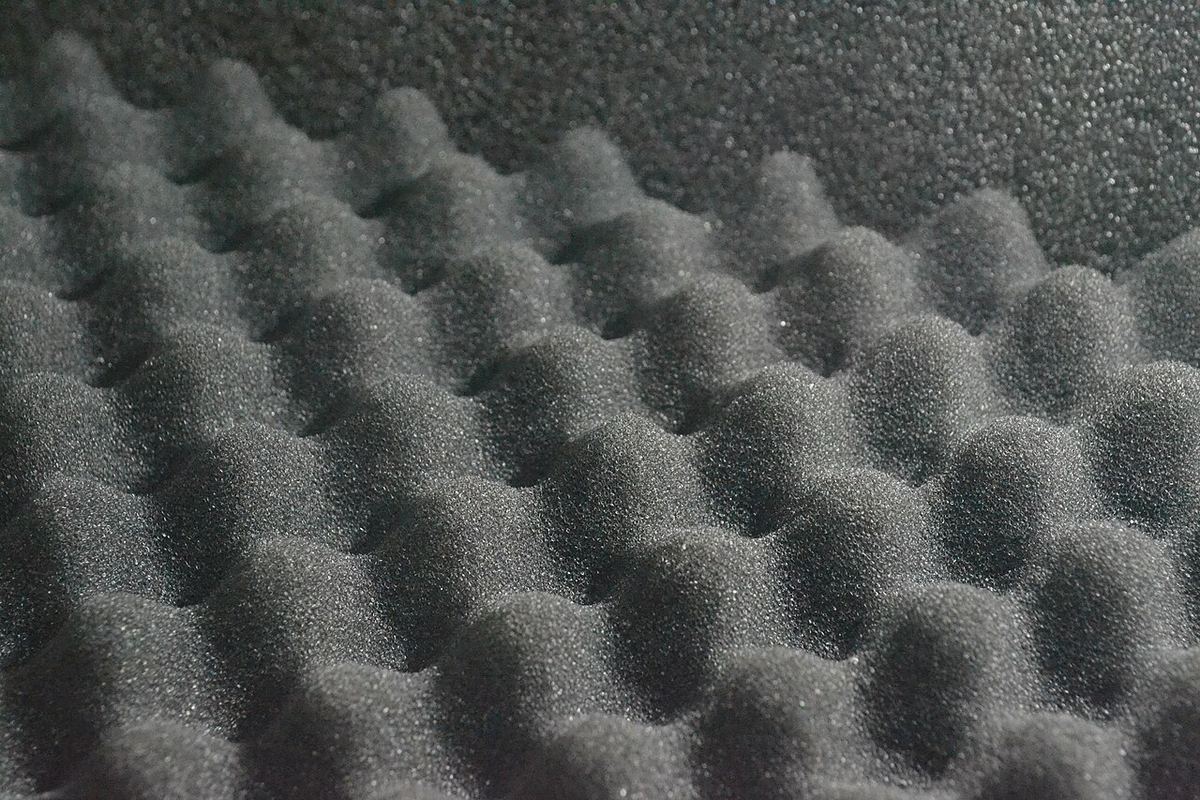
Thin foam tiles, by contrast, absorb only high frequencies. Used in quantity they can leave a room sounding dull while doing nothing for bass, which is the opposite of what most rooms need.
Quick Reference: Placement and Acoustics
| Issue | Cause | First Action |
|---|---|---|
| One-note or boomy bass | Room mode peak at listening seat | Move seat forward/backward by 0.5–1 m |
| Weak or missing bass | Mode null at listening seat | Move seat; also check speaker distance from rear wall |
| Upper-bass suckout (~100–200 Hz) | SBIR from rear wall | Adjust speaker distance from rear wall; aim for >0.8 m or <0.15 m |
| Smeared or indistinct imaging | Strong first reflections | Treat side-wall reflection points with absorption |
| Bright or harsh high frequencies | Flutter echo; hard parallel surfaces | Add soft furnishings; treat floor between speakers and seat |
| Narrow or collapsed soundstage | Listening distance too short; excess absorption | Increase speaker separation; reduce treatment quantity |
Check your speaker and amplifier compatibility
Enter your speakers and amplifier to get a full compatibility analysis — sensitivity, impedance matching, and power requirements for your room size.
Run a Free Analysis →