
More Guides
Beyond a certain price, headphones divide into two camps that work on genuinely different principles. Dynamic drivers use a voice coil attached to a cone or dome, exactly like a miniature loudspeaker. Planar magnetic drivers use a thin flat diaphragm with a conductive trace on it, suspended between arrays of magnets. The difference is not marketing; it changes bass behaviour, distortion, weight and, importantly, what you need to drive them. This guide sets out how each works and which trade-offs come with it.
How a Dynamic Driver Works
A dynamic headphone driver is a small moving-coil transducer. A cylindrical voice coil sits in a magnetic gap, attached to a lightweight dome or cone diaphragm. Current through the coil produces a force, the coil moves, and the diaphragm moves with it. The technology is over a century old, thoroughly understood and cheap to manufacture well.
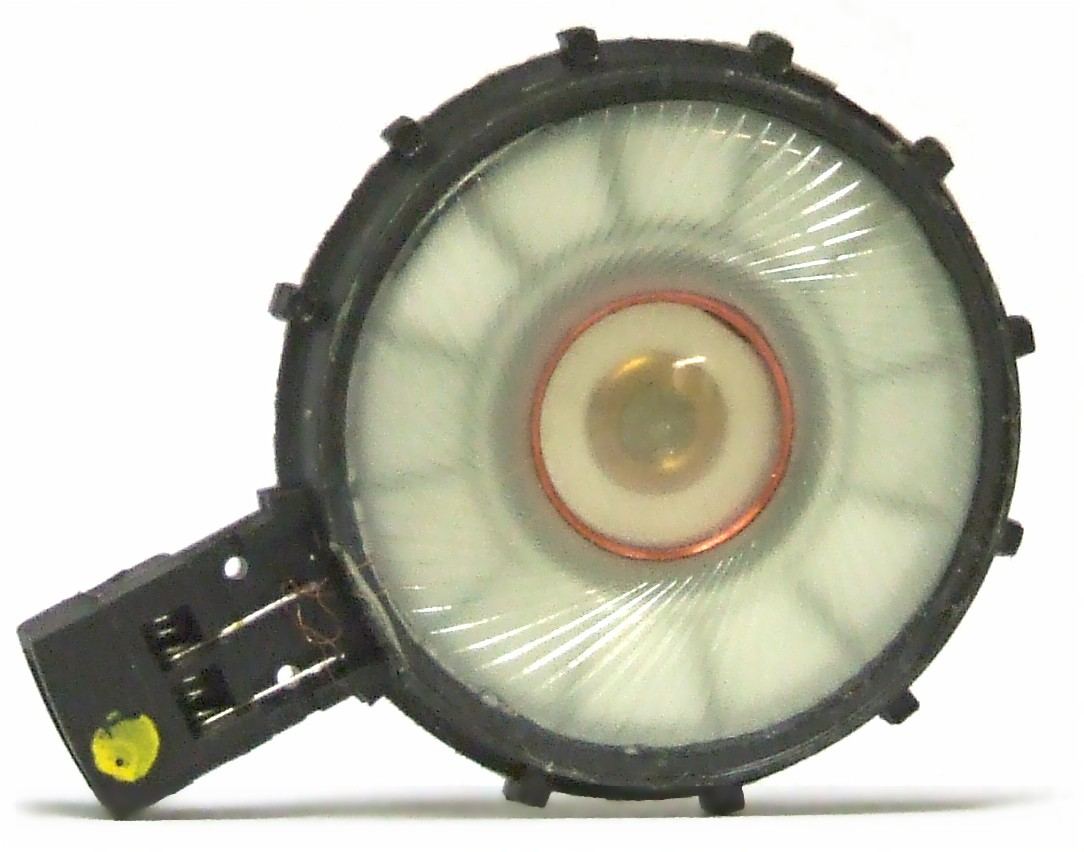
Its defining characteristic is that force is applied at one place — where the coil joins the diaphragm — and must propagate outwards across the diaphragm's surface. At low frequencies the diaphragm moves as a piston and this is fine. Higher up, the diaphragm can flex rather than move as a unit, a behaviour called break-up, and controlling it is much of the art of dynamic driver design.
Dynamic drivers are typically efficient, which is why they work from a phone, and light, which is why the headphones can be comfortable for hours. Their bass extends well but tends to roll off gradually at the lowest frequencies, and distortion generally rises as excursion increases at high levels.
How a Planar Magnetic Driver Works
A planar magnetic driver replaces the coil-and-cone arrangement with a large, extremely thin membrane — often a few microns of polymer film — carrying a conductive trace distributed across its whole surface. Magnet arrays sit on one or both sides. Because the conductor covers the diaphragm, the driving force is applied evenly across the entire surface rather than at a single point.
That distributed drive is the technology's central advantage. There is no coil-to-diaphragm interface to propagate force through, and much less tendency to break up, so the diaphragm moves more nearly as a whole. The consequences show up as very low distortion, particularly at high output, and bass that extends flat rather than rolling off — planar bass often measures ruler-flat down to 20 Hz and below.
The costs are physical. The magnet arrays are heavy, so planar headphones typically weigh 350–600 g against 250–350 g for comparable dynamics, and clamping force and pad design have to work harder for comfort. They are also usually less sensitive, and their impedance behaves differently, which brings us to drive requirements.
Low Impedance, Low Sensitivity, Flat Curve
A planar driver's impedance is essentially resistive and flat across the audio band — commonly 30–60 Ω with almost no variation — because it has no resonant voice-coil-and-suspension system in the electrical sense. That is excellent for frequency response, since the amplifier's output impedance cannot reshape it. But combined with sensitivity often in the 90–100 dB/mW range, it means planars demand real current: low impedance and low sensitivity together are the hardest combination to drive. A dynamic headphone's impedance, by contrast, peaks sharply at its resonance, which is exactly where a high-output-impedance amplifier will add unwanted bass emphasis.
What Each Does Well
Reduced to their strengths, the two technologies are complementary rather than ranked.
Planar magnetic excels at bass extension and control, at low distortion when playing loud, and at a certain evenness through the midrange that comes from a diaphragm behaving coherently. The bass in particular is distinctive: flat to the bottom, tight, and unusually free of the bloom that a resonant system can add.
Dynamic excels at efficiency, weight and cost. A good dynamic headphone can be driven from anything, worn all day, and bought at a fraction of a planar's price for equivalent perceived quality. Dynamics also tend to have a more forgiving relationship with amplifier quality — though not with amplifier output impedance, as noted above.
What neither technology guarantees is tuning. The frequency response a manufacturer chooses matters far more to how a headphone sounds than which driver is inside it, and there are bright planars, warm planars, bright dynamics and warm dynamics. Driver type predicts a set of behaviours; it does not predict a voicing.
Electrostatic: The Third Option
A third technology sits alongside these two. Electrostatic headphones use an extremely thin diaphragm carrying a fixed electrical charge, suspended between two perforated plates called stators. Audio applied to the stators as a very high voltage creates a field that pulls and pushes the diaphragm.

Because the diaphragm is even lighter than a planar's and driven across its whole area, electrostatics achieve the lowest distortion and finest resolution of the three. The catch is that they cannot be driven by a normal amplifier at all: they require a dedicated energiser supplying hundreds of volts and the bias charge, which effectively locks you into a system purchase. They are also usually less capable in the deep bass than the best planars, since the diaphragm cannot move far. Worth knowing about, rarely a first serious headphone.
Practical drive rule: a planar with 96 dB/mW sensitivity at 40 Ω needs only a milliwatt or so at a normal listening level, but around 25 mW to reach 110 dB peaks — and several times that for real headroom on dynamic material, which is more than many phones and DAC dongles can supply cleanly. Check the amplifier's rated output into the impedance you actually own, not its headline figure, and prefer an output impedance below about an eighth of the headphone's impedance.
Choosing Between Them
The decision usually comes down to how you listen and what you will drive them with.
- Choose dynamic if you want portability, if you will drive them from a phone or laptop, if long sessions make weight a concern, or if your budget is modest — the value at the lower end is firmly with dynamics.
- Choose planar if you listen at a desk with a proper amplifier, if deep, flat, controlled bass matters to you, if you play at higher levels where distortion behaviour shows, and if you can tolerate the weight.
- Consider electrostatic only when you are prepared to buy into a complete system and resolution is your priority over bass extension and convenience.
- In every case, judge the specific model. Read the frequency response, listen if you can, and treat driver type as context rather than as the answer.
Voltage or Current: What Each Type Asks of an Amplifier
The two technologies tend to stress amplifiers in different ways, and a worked comparison makes the difference concrete. A useful first step is converting sensitivity into the same unit, since manufacturers quote both dB/mW and dB/V. The relationship is simple: dB/V equals dB/mW plus 10 × log10(1000 ÷ impedance).
Take the planar from the callout above, 96 dB/mW at 40 Ω. That converts to 110 dB/V, so reaching 110 dB peaks takes 1 V and 25 mW. Allowing 10 dB of headroom for dynamic material raises that to 250 mW, which means about 3.2 V and 79 mA. The voltage is modest; the current is what a weak output stage runs out of.
Now take a high-impedance dynamic, 300 Ω at 97 dB/mW. Reaching the same 110 dB needs 20 mW, which into 300 Ω is 2.4 V but only 8 mA. A phone or laptop output that tops out around 1 V delivers just 3.3 mW into that load and peaks at about 102 dB — loud enough for quiet listening, short on headroom for anything dynamic. High-impedance dynamics run out of voltage; low-impedance planars run out of current. Many low-impedance dynamics, at 32 Ω and 100 dB/mW or more, need little of either, which is why they are the type that works from almost anything.
Output Impedance: A Worked Example
The callout's rule — amplifier output impedance below about an eighth of the headphone's impedance — is easiest to understand with numbers. Consider an amplifier with a 10 Ω output impedance, which is not unusual in older or budget equipment.
Into a 32 Ω dynamic headphone whose impedance rises to 50 Ω at its bass resonance, the voltage divider costs 2.4 dB at 32 Ω but only 1.6 dB at 50 Ω. The bass resonance region therefore plays about 0.8 dB louder relative to the midrange than intended — a small but real change in tonal balance, and larger still on dynamics with a more pronounced peak.
Into a 40 Ω planar, the same amplifier costs 1.9 dB — but it costs 1.9 dB at every frequency, because the planar's impedance does not move. The level drops slightly and the frequency response is untouched. This is the practical sense in which planars are tolerant of output impedance and dynamics are not, and it is why the same amplifier can sound neutral on one headphone and bass-heavy on another.
Fit, Seal and Pads
Whatever the driver, the bass a listener actually hears depends heavily on how well the pads seal against the head. In closed-back designs especially, a small leak — from glasses arms, hair, or a clamp too light for the wearer — can cost several decibels below 100 Hz. The heavier weight of planar headphones makes this worth checking in person, since a design that sits well on one head can slip or leak on another.
Pads also wear. Compressed or cracked pads change the distance between driver and ear and alter both bass and treble, so a headphone that seems to have changed character over a few years often needs nothing more than new pads from the original manufacturer. Third-party pads in different materials or depths are a legitimate tuning tool, but they change the sound as surely as an equaliser would, so it pays to compare against the originals before assuming an improvement.
Quick Reference: Driver Types Compared
| Property | Dynamic | Planar Magnetic | Electrostatic |
|---|---|---|---|
| Drive mechanism | Voice coil at one point on the diaphragm | Trace distributed across the diaphragm | Charged film between stators |
| Typical weight | 250–350 g | 350–600 g | Light, but needs an energiser |
| Impedance behaviour | Peaks at resonance; varies with frequency | Flat and resistive, often 30–60 Ω | Capacitive; special amplification |
| Sensitivity | Usually high — phone-drivable | Often low; needs current | Requires a dedicated energiser |
| Bass character | Extends well, gentle roll-off | Flat and extended, very controlled | Least extended of the three |
| Distortion at high level | Rises with excursion | Stays very low | Lowest |
| Cost for the performance | Best value | Higher | Highest, system purchase |
Match headphones to your amplifier
Enter your headphones and source or amplifier for a free analysis of impedance, sensitivity, and whether you have the drive they need.
Run a Free Analysis →