
"You need an amp for those" is one of the most repeated pieces of advice in headphone circles, and it is right often enough that people stop questioning it. But it is also wrong often enough that a lot of listeners spend money on a box that makes no audible difference to the headphones they already own. The honest answer to the title is: it depends entirely on the headphones, and there is a way to work out which side of the line yours fall on without guessing. Two numbers printed on almost every spec sheet do most of the deciding, and once you can read them, the question stops being a matter of faith.
What a Headphone Amp Actually Does
Strip away the marketing and an amplifier does one job: it takes a small audio signal and produces a larger copy of it, with enough electrical muscle to move the driver in your headphones. "Enough muscle" has two components. The amp has to swing enough voltage to reach the volume you want, and it has to be able to deliver enough current at that voltage without the signal sagging or distorting. Do both cleanly and the driver moves exactly as the recording asks, all the way up to loud passages, without the amp running out of headroom.
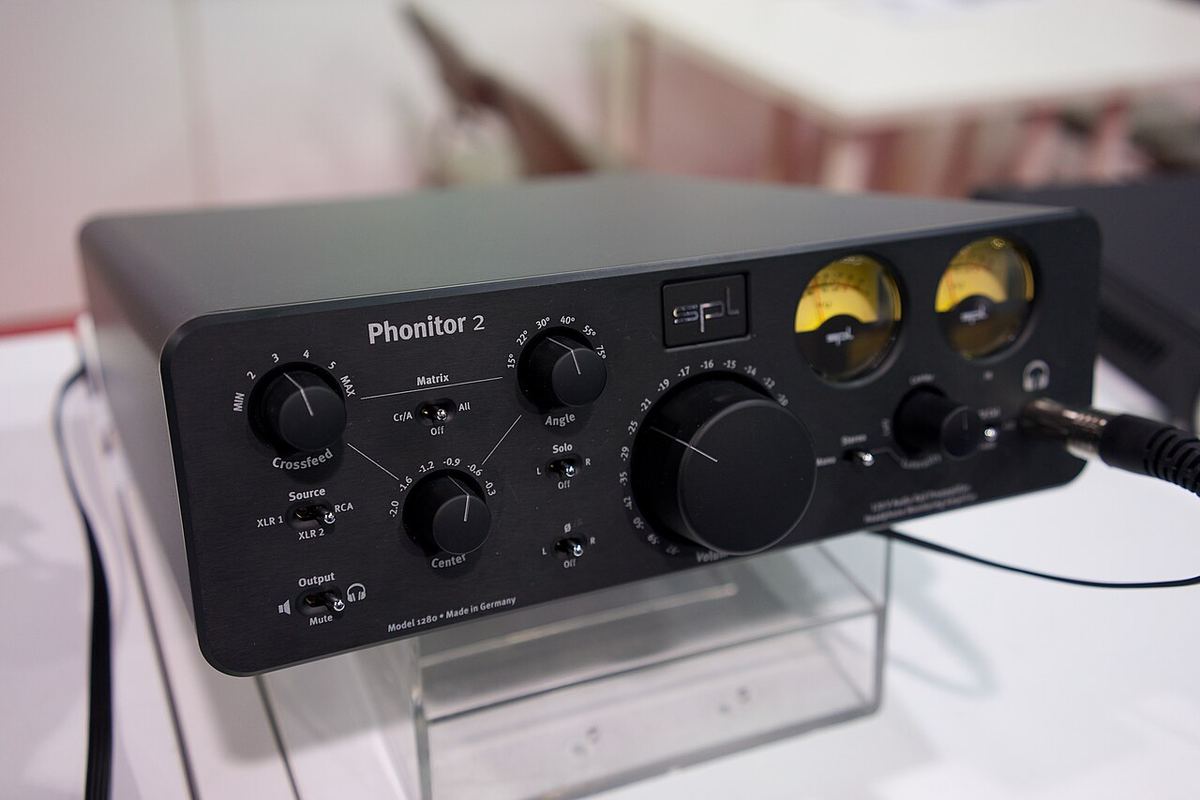
Every device with a headphone output already contains an amplifier — your phone has one, your laptop has one, your audio interface has one. The question is never "amp or no amp." It is whether the amp built into your source can supply the voltage and current your specific headphones demand at the levels you listen. A dedicated headphone amp is only an upgrade when the built-in one is falling short. When it is not, adding one changes nothing you can hear, no matter how good the box is.
The Two Numbers That Decide It
Whether your headphones are hard or easy to drive comes down to two published specs: impedance and sensitivity. Almost every "do I need an amp" question can be answered by reading them together. One tells you roughly how much voltage the headphones want; the other tells you how loudly they play for the power they are given.

Impedance (Ohms)
Impedance is the electrical resistance the headphones present to the amp, measured in ohms (Ω). Most consumer headphones and in-ear monitors sit at 16–50Ω and are easy to drive from anything. The demanding cases are high-impedance designs at 250Ω, 300Ω, or 600Ω — common in older studio and audiophile models. Higher impedance chiefly means the amp must swing more voltage to reach a given volume, which is exactly what a small phone output struggles to provide.
Sensitivity / Efficiency (dB per mW or dB per V)
Sensitivity states how loud the headphones get for a fixed input — usually decibels of output per milliwatt (dB/mW) or per volt (dB/V). A high figure, say 100–110 dB/mW, means they reach satisfying levels on very little power. A low figure, around 90 dB/mW or below, means they are power-hungry and need real drive to come alive. Many planar-magnetic headphones combine low sensitivity with low impedance, so they are current-hungry rather than voltage-hungry.
Read together, the two numbers sort headphones into a few practical groups. High sensitivity plus low impedance (most IEMs and portable on-ears) is the easy case — any modern source drives them to painful volumes with headroom left over. High impedance plus modest sensitivity (classic 250–600Ω studio cans) needs voltage, and a phone jack often simply cannot reach comfortable listening levels. Low impedance plus low sensitivity (many planars) needs current, and a weak output may get loud enough on paper but go soft and lifeless on dynamic peaks. It is that third group that fools people, because "it plays loud enough" is not the same as "it is being driven properly."
Voltage Versus Current, and Why the Spec Beats Guessing
The voltage-versus-current distinction is worth holding onto because it explains why two headphones that both "need an amp" can need completely different things. A 300Ω headphone at moderate sensitivity is a voltage problem: it draws little current, but reaching 110 dB peaks requires a large voltage swing that tiny outputs cannot produce. A 32Ω planar at low sensitivity is a current problem: the voltage needed is unremarkable, but the amp has to shove a lot of current through that low impedance to keep the driver under control on bass-heavy, dynamic material.
You do not have to intuit any of this. The power a headphone needs to hit a target loudness can be calculated from its sensitivity, and a competent amp lists how much power it delivers into a given impedance. If the amp's output at your headphone's impedance comfortably exceeds what the headphone needs for, say, 105–110 dB peaks with headroom, you are covered; if it falls short, you are not. A number on paper beats a forum anecdote every time, because it accounts for the exact pairing in front of you rather than someone else's ears and someone else's gear.
The caveat that saves money: if your headphones already play as loud as you would ever want, with tight bass and full dynamic swings that do not collapse on peaks, they are being driven properly. An amp cannot improve on "already loud and clean." Adding one at that point buys you volume you will never use, not better sound.
How to Tell If Your Source Is Underpowering Them
You do not need test equipment to catch an underpowered pairing — the symptoms are fairly consistent once you know what to listen for. The tell-tale signs that your source is running out of steam are:
- It never gets loud enough. The volume control is near maximum and the music is still merely adequate. This is the classic high-impedance-into-a-phone symptom: the amp has run out of voltage.
- The bass is thin, soft, or vague. Low frequencies demand the most current. When an amp is current-starved, bass is the first thing to lose weight and grip, sounding loose or undernourished even at moderate volume.
- Dynamics fall flat. Quiet-to-loud swings feel compressed, and busy passages turn congested or harsh instead of opening up. The amp is clipping or sagging on peaks it cannot cleanly reproduce.
- You crank it and it distorts before it satisfies. If pushing for more level brings audible strain rather than more music, the output stage is at its limit.
If none of that describes your listening — the headphones get plenty loud at a sensible volume setting, bass is firm, and loud passages stay clean — then your source is doing its job and a separate amp has nothing to fix. Easy IEMs and sensitive, low-impedance headphones almost always land here straight out of a phone or laptop.
DAC Versus Amp: Which One Is the Bottleneck?
These two functions get conflated constantly, so it is worth being precise. A DAC (digital-to-analog converter) turns the digital audio file into an analog waveform. An amp takes that analog waveform and drives it into your headphones. They are different jobs, and a "DAC/amp" is simply one box that does both in sequence. Many portable dongles and desktop units are exactly this combination.
Here is the part that trips people up: when a source sounds weak or lifeless, the amplifier stage is usually the limiting factor, not the DAC. Modern digital conversion is extremely good even in inexpensive chips, so the DAC in a mid-range phone is rarely what is holding back a hard-to-drive headphone — it is the small, power-limited amp behind it. Upgrading conversion while ignoring drive is a common misallocation. If your headphones are being underpowered, you need more clean output power, which is an amp specification, whether it arrives as a standalone amp or as the amp half of a DAC/amp combo.
Output Impedance and the 1/8 Rule
One amp spec matters for reasons of matching rather than raw power: output impedance. Every amp has a small internal impedance at its output, and it interacts with the headphone's impedance — which is not a flat number but varies with frequency, especially in multi-driver IEMs and some dynamic headphones. When the amp's output impedance is a meaningful fraction of the headphone's, those impedance swings translate into audible changes in frequency response, typically a loose or altered bass region.
The widely used rule of thumb is the 1/8 rule: keep the amp's output impedance at or below one-eighth of the headphone's impedance. A 32Ω headphone wants a source under about 4Ω; a sensitive multi-driver IEM at low impedance wants a source well under 1Ω. Get this wrong and the symptom is not lack of power but a subtly wrong tonal balance that shifts from headphone to headphone. It is the reason a high-output-impedance amp can make one pair sound bloated and another sound thin — the amp is fine, the pairing is not.
Diminishing Returns and the Honest Verdict
The uncomfortable truth for the upgrade industry is that headphone amps do not have a "better sound" dial. An amp that supplies clean voltage and current with low output impedance is doing everything an amp can do. Once your headphones are properly driven, a more expensive amp does not extract more detail, widen the stage, or add refinement — those qualities live in the headphones and the recording, not in surplus power. This is textbook diminishing returns: the jump from underpowered to adequately powered is large and obvious; the jump from adequate to lavish is, for a properly matched pair, inaudible.
So the buying logic is simple. Read your headphones' impedance and sensitivity. If they are easy to drive and already sound full and loud from your current source, keep your money — an amp will not improve them. If they are high-impedance, low-sensitivity, or showing the underpowering symptoms above, then a modestly specified amp that comfortably meets their power needs and respects the 1/8 rule will transform them, and a costlier one beyond that point will not do meaningfully more. Match to the need, not to the price tag.
Quick Reference: Headphone Type Versus Likely Amp Need
| Headphone Type | Typical Specs | Likely Amp Need |
|---|---|---|
| In-ear monitors (IEMs) | 16–32Ω, high sensitivity | None — phone/laptop is plenty; watch source output impedance |
| Portable on-ear / consumer | 16–50Ω, high sensitivity | None — designed to run from mobile devices |
| Mid-tier open-back (low-Z) | 32–80Ω, moderate sensitivity | Optional — benefits from a little more clean power |
| High-impedance studio / audiophile | 250–600Ω | Recommended — needs voltage a phone jack cannot supply |
| Planar-magnetic | Low impedance, low sensitivity | Recommended — current-hungry; weak sources sound soft |
| Already loud & clean from your source | Any | None — an amp cannot improve a well-driven headphone |
Check whether your headphones are being driven
Enter your headphones, amp or DAC/amp, and source to see whether the pairing has the voltage and current your cans actually need — and where the real bottleneck is.
Run a Free Analysis →