
More Guides
Hum is the most democratic fault in audio: it turns up in cheap systems and expensive ones, and it almost never indicates that anything is broken. It usually means that two devices which are already connected by a signal cable are also connected by a second path through the mains earth, and a small current is circulating between them. The good news is that hum yields to a systematic method. The bad news is that the most commonly suggested fix — lifting the mains earth — is genuinely dangerous. This guide covers the diagnosis and the safe repairs.
What a Ground Loop Actually Is
Two components sitting on a rack are each connected to mains earth through their power cables. Connect them with an interconnect and the cable's shield joins their chassis grounds together as well. There are now two conductive paths between the same two points, forming a loop.
A loop matters because the earth connections are not at exactly the same potential. Different mains outlets, different circuits and different cable lengths all produce tiny voltage differences, and that small difference drives a current around the loop. Since part of the loop is your interconnect's shield — which is also the signal return — the current appears as a voltage in series with the audio. That is your hum. The loop also acts as an antenna, picking up whatever magnetic fields are nearby, which is why hum often changes when you move a power cable.
Read the Sound Before Touching Anything
The character of the noise narrows the cause down considerably, and the distinction is worth a moment's careful listening.
A low, smooth hum at the mains frequency — 50 Hz in most of the world, 60 Hz in North America — is characteristic of a ground loop or of magnetic induction into a cable or transformer. A harsher buzz, rich in harmonics, usually points elsewhere: dimmer switches, switch-mode supplies, chargers, or a failing appliance putting rubbish onto the mains. A hum that changes with the volume control is entering before the volume control, so the source or the interconnect feeding it is the suspect; a hum that stays constant regardless of volume is entering after it, in the power amplifier or its supply.
Volume-Dependence and Input-Swapping
These two tests take a minute and eliminate most of the possibilities. First, turn the volume up and down: noise that tracks the control comes from upstream of it, noise that does not is downstream. Second, disconnect every input from the amplifier and listen: if the hum vanishes, it is arriving through a source connection, and you can reconnect them one at a time to find which. If it remains with no inputs connected at all, the fault is in the amplifier, its power supply, or its own earthing.
Finding the Culprit, One Component at a Time
With the broad category established, isolate the specific component by subtraction. Work with the volume low — some of these steps can produce loud transients.
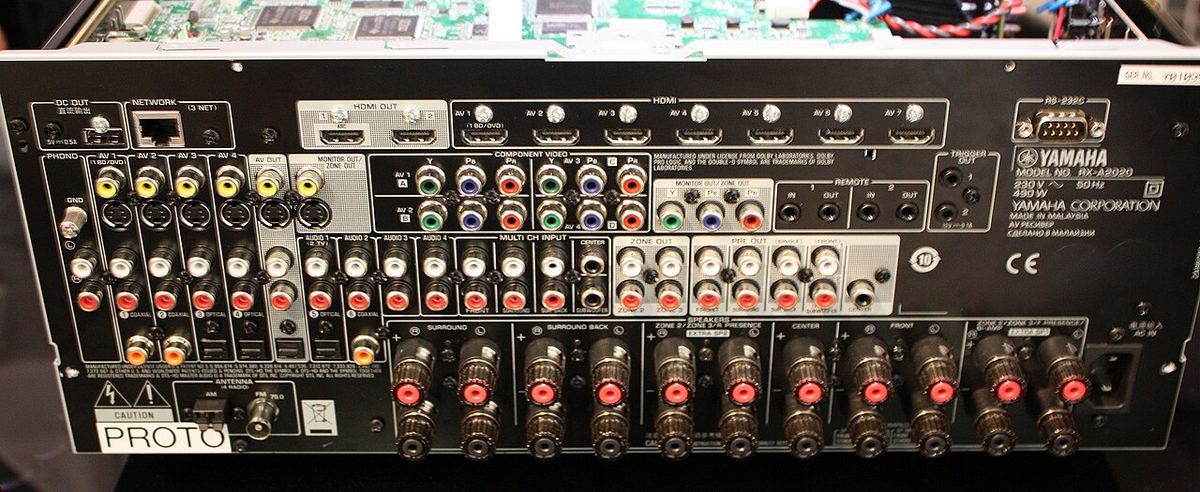
- 1. Strip the system. Leave only the amplifier and speakers connected, with nothing plugged into the inputs. Confirm whether the hum is present.
- 2. Add sources back one at a time, both signal cable and mains lead, listening after each. The first one that reintroduces the hum is your loop partner.
- 3. Test the mains path separately. With the offending source connected by interconnect only and its mains lead unplugged, the loop is broken; if the hum stops, you have confirmed a ground loop rather than a faulty cable.
- 4. Swap the interconnect for a known-good one. A broken shield connection at one end produces hum that looks exactly like a ground loop.
- 5. Move the cables. Separate mains leads from signal cables, and cross them at right angles rather than running them in parallel. Induction into a signal cable from a nearby power cable or transformer is common and free to fix.
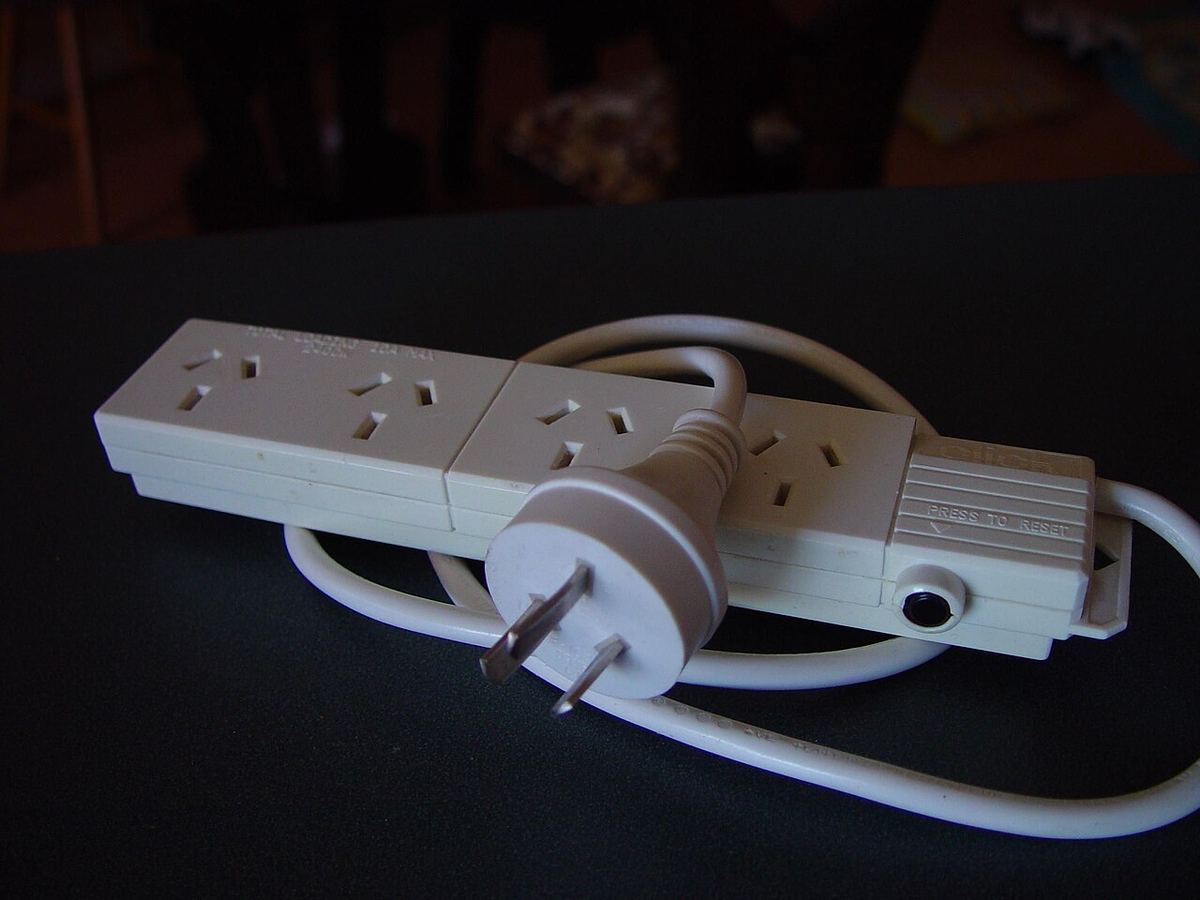
- 6. Try one outlet. Plugging everything into the same mains outlet or distribution block puts all the earths at nearly the same potential and eliminates a large class of loops.
Turntables deserve a special mention, because they are the most frequent source of hum and usually for a benign reason: the separate thin earth wire from the deck to the phono stage's ground terminal is missing, loose, or connected to the wrong place. Before suspecting anything else, check that wire. If a turntable hums only with the earth wire connected, try instead removing it — some decks with a fully earthed arm create a loop when the extra wire is also fitted.
The Fix That You Must Not Use
Almost every forum thread about hum eventually recommends a "ground lift" adapter or cutting the earth pin. This works, and it is dangerous. The mains earth exists so that a fault inside a component — a live wire touching the chassis — blows a fuse or trips a breaker instead of leaving the metalwork live. Remove that path and the chassis can sit at mains potential with nothing to indicate it, and the next thing to touch it may be you.
Never disconnect a mains earth to cure hum. There is always a safe alternative that addresses the same loop, and every one of them is described below. If none of them works, the fault is in a component and wants a technician, not a lifted earth.
The Fixes That Are Safe
Ordered from simplest and cheapest upwards, these address the loop without touching protective earthing.
Single point of connection. Run everything from one outlet via a good-quality distribution block. This is free, safe and resolves a large proportion of cases outright.
Cable dressing. Physically separate signal and mains cables, avoid coiling excess mains lead beside interconnects, and keep signal cables away from transformers — including the one in your own power amplifier.
Break the loop optically. Where the offending device is a computer, television or console, an optical S/PDIF connection carries the audio on light and creates no electrical path at all. This is the cleanest fix available and costs the price of a TOSLINK cable.
Use balanced connections. XLR interconnects carry the signal on two conductors and reject anything common to both, including circulating ground currents. Where both components offer balanced connections, using them frequently solves the problem by design.
Fit an audio isolation transformer. An inline transformer on the signal line passes audio magnetically while breaking the electrical continuity of the shield. This is the standard fix for a stubborn loop — particularly on cable television feeds, which are a notorious cause — and it keeps every mains earth intact. Choose one rated for line level and expect a small insertion loss.
Use a DI box or galvanic USB isolator where the loop involves a computer's USB connection; the isolator breaks the ground path in the data link itself.
When It Is Not a Loop at All
Three other causes look like hum and are fixed differently. Radio-frequency interference arriving on a long unshielded run tends to produce a buzz rather than a hum and sometimes audible broadcast content; ferrite clamps and shorter, better-shielded cables help. Mechanical transformer hum comes from the component itself rather than the speakers — if you can hear it with the speakers disconnected, it is the transformer's laminations vibrating, often provoked by DC on the mains from a nearby appliance. Dirty mains from dimmers and switch-mode devices produces a buzz that comes and goes with the offending appliance; the test is to switch things off around the house one at a time.
The distinguishing question in all three cases is simple: does the noise come out of the speakers, or out of the box? Noise from the box is mechanical and does not respond to any signal-path fix.
How Small the Voltages Are
Some illustrative numbers show why hum is so stubborn and why it is worst with turntables. Suppose the ground potential difference between two outlets drives a current of 10 mA around a loop, and the interconnect's shield has a resistance of 0.05 Ω. The voltage dropped along the shield, and therefore added to the signal, is 0.5 mV.
On a line-level connection carrying signals of up to 2 V, that is about 72 dB below full scale — quiet, but audible in silent passages on sensitive speakers, and it never goes away. Now inject the same 0.5 mV into a phono connection where a moving-magnet cartridge produces around 5 mV. The hum is only 20 dB below the music, and the phono stage then amplifies both together by 40 dB or more. The same loop that is a faint annoyance at line level is a serious problem at phono level, which is why the turntable's earth arrangement deserves attention before anything else.
Aerial and Cable Television Feeds
A television connected to an aerial or cable service brings an additional earth into the system: the coaxial cable's shield, typically bonded to earth where it enters the building, at a potential that can differ noticeably from the earth at your hi-fi's outlet. Once the television is connected to the hi-fi by an analogue or coaxial digital cable, the loop runs through the aerial feed, and the resulting hum is often loud and difficult to cure by rearranging plugs.
The standard fix is an aerial or coaxial isolator, a small inline device that passes the RF signal through capacitors while breaking the DC and mains-frequency path, fitted at the equipment end of the aerial lead. Never remove or disconnect the bonding where the cable enters the building; it is there for safety and lightning protection. An optical connection from the television to the hi-fi fixes the same loop from the other side.
Subwoofers: A Frequent Culprit
Powered subwoofers create loops readily, because they combine a mains connection, a long signal cable and a placement that is often across the room on a different outlet or circuit. If hum appears or disappears with the subwoofer's signal cable, try in order: powering the subwoofer from the same distribution block as the amplifier, rerouting its signal cable away from mains leads, and fitting a line-level isolation transformer in the subwoofer's feed.
Remember to check the subwoofer on its own first. If it hums with its signal cable disconnected entirely, the problem is inside the subwoofer — its amplifier or power supply — and no signal-path fix will help.
Laptops, Chargers and Two-Pin Supplies
Laptops and other devices with external chargers produce a distinctive whine or buzz rather than a clean hum, and it often changes with processor load or screen activity. The quick test is to unplug the charger and run on battery: if the noise disappears, the charger is the path. Many chargers have no earth connection, so their output floats at a small leakage voltage relative to mains earth, which flows into the hi-fi through the audio or USB cable.
The fixes are the same as for any loop: an optical output, a USB isolator, a DAC with galvanic isolation on its USB input, or simply playing from battery during serious listening. An earthed charger, where one is offered for the device, can also help.
Quick Reference: Symptom to Cause
| Symptom | Likely Cause | First Thing to Try |
|---|---|---|
| Smooth hum at mains frequency, tracks volume | Ground loop via a source component | All devices on one outlet; disconnect sources one at a time |
| Hum constant regardless of volume | Entering after the volume control | Check power amplifier earthing and its own mains feed |
| Hum only with the turntable connected | Missing, loose or duplicated deck earth wire | Check the ground wire; try with and without it |
| Harsh buzz with harmonics | Dimmers, chargers, switch-mode supplies on the mains | Switch off suspect appliances one at a time |
| Hum appears when a TV or computer is connected | Loop through a noisy digital device | Use an optical connection or a USB isolator |
| Noise audible from the component, not the speakers | Mechanical transformer hum, often DC on the mains | Identify the appliance causing it; consider a DC blocker |
Diagnose your chain
Enter your components for a free analysis of grounding, connection types, and where in the signal path noise is most likely to be entering.
Run a Free Analysis →