
More Guides
Ask around and you will hear that balanced connections are simply better — cleaner, quieter, more high-end. The reality is more interesting and a good deal more useful. Balanced wiring is a specific engineering solution to a specific problem: keeping noise out of a signal as it travels down a cable. It is brilliant at that job. But whether it improves the sound in your particular system depends on how long your cables are, how noisy your electrical environment is, and whether the gear on both ends is genuinely balanced or just wears an XLR socket. This guide walks through what the two connection types actually are, the real mechanism behind balanced audio, and where it earns its keep versus where a good unbalanced link is every bit as good.
What "Unbalanced" Actually Means
An unbalanced connection — also called single-ended — is the familiar RCA interconnect on the back of nearly every consumer component. It carries the audio on two conductors: one signal wire and one ground, which usually doubles as the cable's shield. The signal voltage is measured as the difference between that single signal wire and ground. It is simple, cheap, and for the short runs typical of a domestic rack it works extremely well.
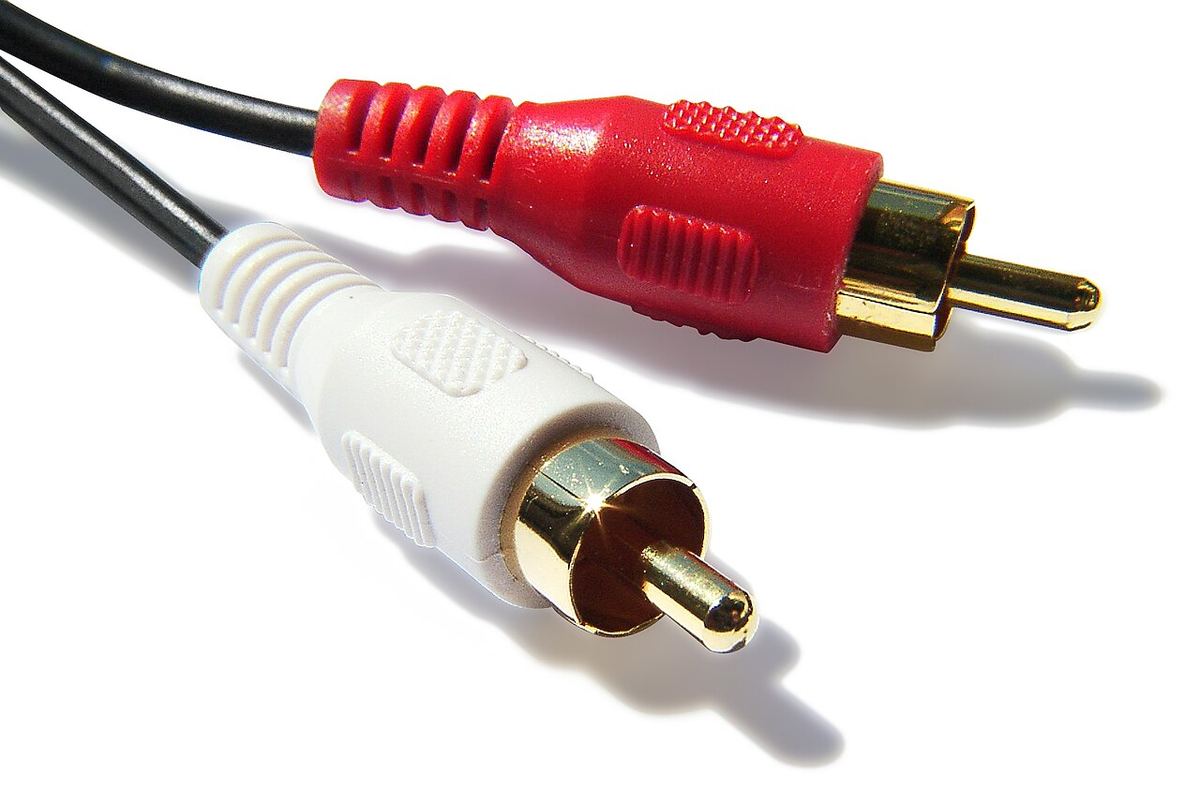
The limitation is structural. Because the signal is referenced to ground, any electrical noise the cable picks up — from mains wiring, transformers, dimmers, or nearby digital gear — rides along on top of the signal, and the receiving component has no way to tell the wanted signal apart from the interference. Over a short interconnect this rarely amounts to anything audible. Over long runs, or in an electrically busy room, the noise can accumulate into a faint hiss or hum.
Single-Ended (RCA): Two Conductors
Signal plus ground, with the signal referenced to that ground. The connector is the ubiquitous RCA phono plug, typically colour-coded red for right and white or black for left. Nominal consumer line level sits around 0.316 V RMS (the "-10 dBV" standard). Ideal for the short interconnects between source, preamp, and power amp in a normal system, where its simplicity is a genuine virtue.
What "Balanced" Actually Means
A balanced connection carries the audio on three conductors: hot (the in-phase signal, often labelled "+"), cold (an inverted copy of the same signal, labelled "-"), and ground. The key idea is that the music is transmitted differentially — as the difference between hot and cold, which carry the identical signal in opposite polarity. On the hot leg the waveform swings one way; on the cold leg it swings the mirror-image way at exactly the same instant.
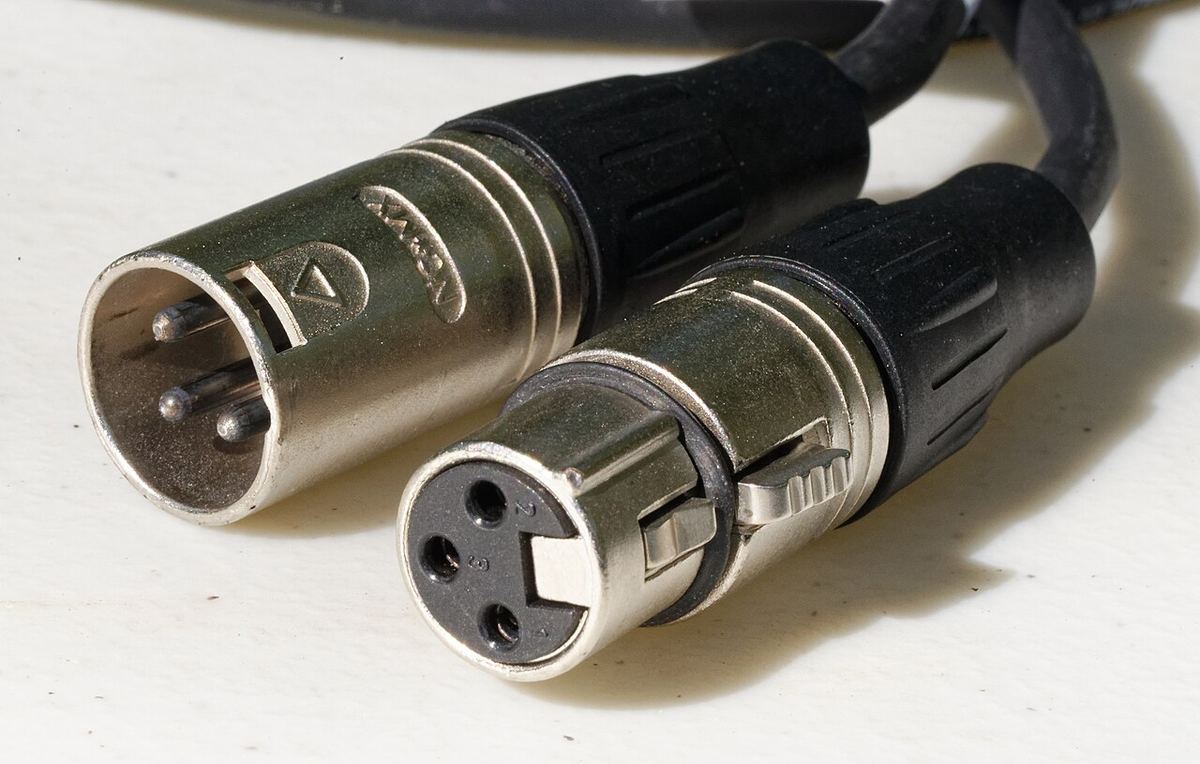
In home and professional audio this is delivered over an XLR connector (three pins) or, inside gear and on some equipment, a TRS jack — the tip-ring-sleeve plug that looks like a headphone connector but wires tip to hot, ring to cold, and sleeve to ground. Both carry the same three-conductor differential scheme; XLR is simply the rugged, locking connector that the professional world standardised on.
Differential (XLR / TRS): Three Conductors
Hot, cold, and ground, with the signal carried as the difference between hot and cold. The standard XLR pinout is pin 1 = ground, pin 2 = hot (positive), pin 3 = cold (negative) — worth knowing, because a small number of older or foreign designs swapped pins 2 and 3, which inverts absolute polarity. A TRS jack maps the same roles onto tip, ring, and sleeve.
The Real Mechanism: Common-Mode Rejection
Here is where balanced audio earns its reputation, and it has nothing to do with the connector being fancier. As the hot and cold conductors run side by side down the cable, they are twisted together and share the same physical path. Any interference the cable picks up — radiated hum, RF, mains noise — lands on both conductors essentially equally, in the same polarity. Noise that appears identically on both legs is called common-mode.
At the receiving end sits a differential input whose only job is to amplify the difference between hot and cold. It subtracts one leg from the other. Because the wanted signal is opposite-polarity on the two legs, that subtraction reinforces it — the differences add up. But the noise, being identical on both legs, subtracts to nearly zero and cancels out. That cancellation is common-mode rejection, and its effectiveness is quoted as CMRR (common-mode rejection ratio). A well-designed balanced input can reject common-mode noise by 60 to 90 dB or more.
The crucial thing to grasp is that balanced connections do not make the signal cleaner at the source. They make the receiver able to ignore noise the cable collected along the way. This is why the benefit scales with exposure: the longer the run and the noisier the surroundings, the more interference there is to reject, and the more the scheme pays off.
The caveat worth internalising: Balanced is not automatically higher fidelity. Its advantage is noise rejection over the cable, which barely comes into play across a one-metre interconnect in a quiet living room. A well-designed RCA connection over a short run is sonically excellent, and a "balanced" XLR jack bolted onto a product that is single-ended internally gains you little more than a different plug. Judge the whole design, not the socket.
Where Balanced Actually Helps
Common-mode rejection is a real electrical advantage, so the honest question is when it becomes an audible one. The answer tracks the conditions that generate cable-borne noise in the first place.
- Long cable runs. This is the headline case. Feeding a signal 5, 10, or 20 metres — to a power amp across the room, to active speakers, across a studio, or through an installed system — gives interference far more cable to couple into. Balanced running keeps those runs quiet where unbalanced would start to hiss or hum.
- Electrically noisy environments. Rooms with lots of mains wiring, lighting dimmers, motors, computer gear, or radio transmitters put more interference into the air. Balanced connections shrug off the common-mode component of all of it.
- Professional and studio contexts. Studios standardised on balanced wiring precisely because they run long cables through electrically dense buildings and cannot tolerate accumulated noise. It is a workflow and reliability decision as much as a sonic one.
- Ground-loop-prone setups. Where components on different mains circuits create a hum-inducing ground loop, a balanced interface — which references the signal to the difference between two legs rather than to chassis ground — can break the loop that an unbalanced link would let hum through.
Notice what is missing from that list: "a normal system with short interconnects in a quiet home." In that setting the noise balanced wiring exists to reject is largely absent to begin with, which is why so many superb domestic systems are entirely single-ended.
The 6 dB Level Difference and Gain Staging
There is a practical wrinkle that trips people up when they switch a component from its RCA to its XLR outputs. Balanced outputs typically deliver roughly twice the voltage of the unbalanced outputs on the same unit — about 6 dB higher — because both the hot and cold legs swing, and the receiver sums them. A typical modern consumer source delivers about 2 V RMS at full scale from its RCA outputs and about 4 V from its XLR outputs, and the pro world's nominal +4 dBu balanced standard sits about 12 dB hotter than the -10 dBV consumer standard.
The consequence is a gain-staging one. Swap from RCA to XLR between the same two boxes and the system will suddenly play noticeably louder at the same volume setting. That is not the balanced connection sounding "better" or "more dynamic" — it is simply more level, and louder almost always seems better in a quick comparison. For any fair listening test between the two, you must match levels first, or the louder option wins by default regardless of its actual merits. The higher balanced output can also push a sensitive input toward clipping if the downstream gain is not set with the hotter signal in mind.
Match Levels Before You Judge
Because balanced outputs run about 6 dB hotter, an A/B between XLR and RCA is only meaningful once both are set to the same loudness at the listening seat. Otherwise you are comparing volume, not connection type. Also confirm your preamp or amp input can accept the higher balanced level without overload — most can, but very sensitive inputs are worth checking.
Ground Loops, Hum, and Isolation
A frequent reason people reach for balanced cables is to chase down hum, so it is worth being precise about what is happening. A ground loop forms when two connected components are grounded at more than one point and a small voltage difference exists between those grounds. Current flows through the shared signal ground, and you hear it as a low hum, usually at the mains frequency and its harmonics.
Balanced connections help here because the signal no longer rides on the ground reference — it lives in the difference between hot and cold — so a modest ground-potential difference is rejected as common-mode rather than injected into the music. That said, balanced wiring is not the only fix, and often not the first one to try. Consolidating everything onto a single mains outlet or distribution block, so all chassis share one ground reference, removes many loops outright. Dedicated isolation transformers and, for the specific case of hum entering through a cable-TV or antenna feed, a galvanic isolator on that line, address the problem directly. Balanced interfaces and isolation are complementary tools for the same underlying issue.
Connectors and Impedance in Brief
A little connector and impedance literacy prevents most mismatches. The essentials are few.
RCA, XLR, and TRS at a Glance
RCA is the single-ended consumer plug: centre pin for signal, outer barrel for ground. XLR is the three-pin balanced connector — pin 1 ground, pin 2 hot, pin 3 cold — with a latch that locks it in place. TRS is a balanced jack carrying the same three roles on tip (hot), ring (cold), and sleeve (ground); a two-conductor TS jack, by contrast, is unbalanced. Analog interconnects are relatively insensitive to precise cable impedance over short domestic runs, unlike digital links; what matters more is that the source's low output impedance comfortably drives the receiver's higher input impedance, which is the normal case for line-level gear.
One combining note: you can adapt between balanced and unbalanced when a component only offers one type, but doing so forfeits the common-mode benefit, because a single-ended device has no cold leg for the differential receiver to work against. A simple adapter or a correctly wired cable will pass the signal fine; it just reverts to single-ended behaviour for that link, which for a short run is usually no loss at all.
So Should You Use Balanced?
Reduce it to the conditions and the decision becomes easy. If your components offer balanced connections, your cable runs are long, or your environment is electrically noisy, use balanced — you will get the noise immunity it was designed for. If both ends are genuinely balanced internally and the option costs you nothing, using the XLR outputs is a reasonable default even on shorter runs. But if your runs are short, your system is quiet, and choosing balanced would mean paying more for cables or buying a component purely for its XLR sockets, there is no fidelity reason to do so. A well-implemented single-ended chain is not a compromise; it is the right tool for the common domestic case.
The one habit worth keeping is skepticism toward the socket itself. A rear panel full of XLRs tells you a manufacturer offered balanced connectivity, not that the circuit behind them is fully differential end to end. When it matters, look for a design described as truly or fully balanced throughout the signal path, and always match levels before you let your ears cast a vote.
Quick Reference: Balanced vs Unbalanced at a Glance
| Aspect | Unbalanced (RCA) | Balanced (XLR / TRS) |
|---|---|---|
| Conductors | Signal + ground (2) | Hot + cold + ground (3) |
| How signal is carried | Referenced to ground | Difference between hot and cold |
| Noise handling | Cable noise rides on the signal | Common-mode noise cancelled at the receiver |
| Typical level | ~2 V RMS at full scale from modern sources (about 6 dB lower) | ~4 V RMS at full scale; +4 dBu pro nominal (about 6 dB higher) |
| Connector | RCA phono | XLR (pin 2 hot, 3 cold, 1 ground) or TRS |
| Best suited to | Short runs in a quiet home system | Long runs, noisy rooms, studio and pro use |
| At home, short runs | Excellent — no real disadvantage | Little practical benefit unless fully balanced end to end |
Check your connections across the whole chain
Enter your source, preamp, and amplifier to check balanced-versus-unbalanced matching, gain staging, and overall signal-chain compatibility before you buy cables or gear.
Run a Free Analysis →