
More Guides
Hi-fi is unusually prone to folklore. The effects being discussed are real but often small, listening is subjective and easily influenced, and there is a large industry with an interest in keeping certain beliefs alive. The result is a body of received wisdom in which genuinely important ideas sit right next to claims that fall apart the moment anyone measures them. This guide works through the ones you are most likely to encounter early on. The aim is not cynicism — several of these have a kernel of truth worth keeping — but proportion: knowing which claims deserve your attention and, more usefully, which deserve your money.
Myth: More Watts Means More Volume
Power ratings are the most misread number in audio. Loudness does not scale linearly with watts — it scales with the logarithm of power. Doubling amplifier power buys you 3 dB, which is a modest step, roughly the smallest change most listeners describe as clearly louder. Going from 50 W to 100 W is the same 3 dB as going from 200 W to 400 W.
Speaker sensitivity, by contrast, is a direct trade. A speaker rated 90 dB/W/m needs half the power of an 87 dB one for the same level, and a quarter of a speaker rated 84 dB. Three decibels of sensitivity is worth exactly as much as doubling your amplifier. This is why a 30 W amplifier on efficient speakers can play far louder than a 100 W amplifier on insensitive ones, and why the useful question is never "how many watts" but "enough watts for these speakers in this room".
The kernel of truth: headroom is real. An amplifier pushed into clipping sounds harsh and can damage tweeters, so having comfortably more power than you routinely use is genuinely worth having. That is an argument for adequacy, not for chasing the biggest number on the page.
Myth: Expensive Cables Transform a System
Cables do have measurable electrical properties — resistance, capacitance, inductance — and those properties can matter. A speaker cable that is too thin over a long run adds series resistance, which wastes a little power and, more importantly, degrades the amplifier's control over the driver. An interconnect with very high capacitance can roll off the top end when fed by a high-impedance source. These are real effects with real explanations.
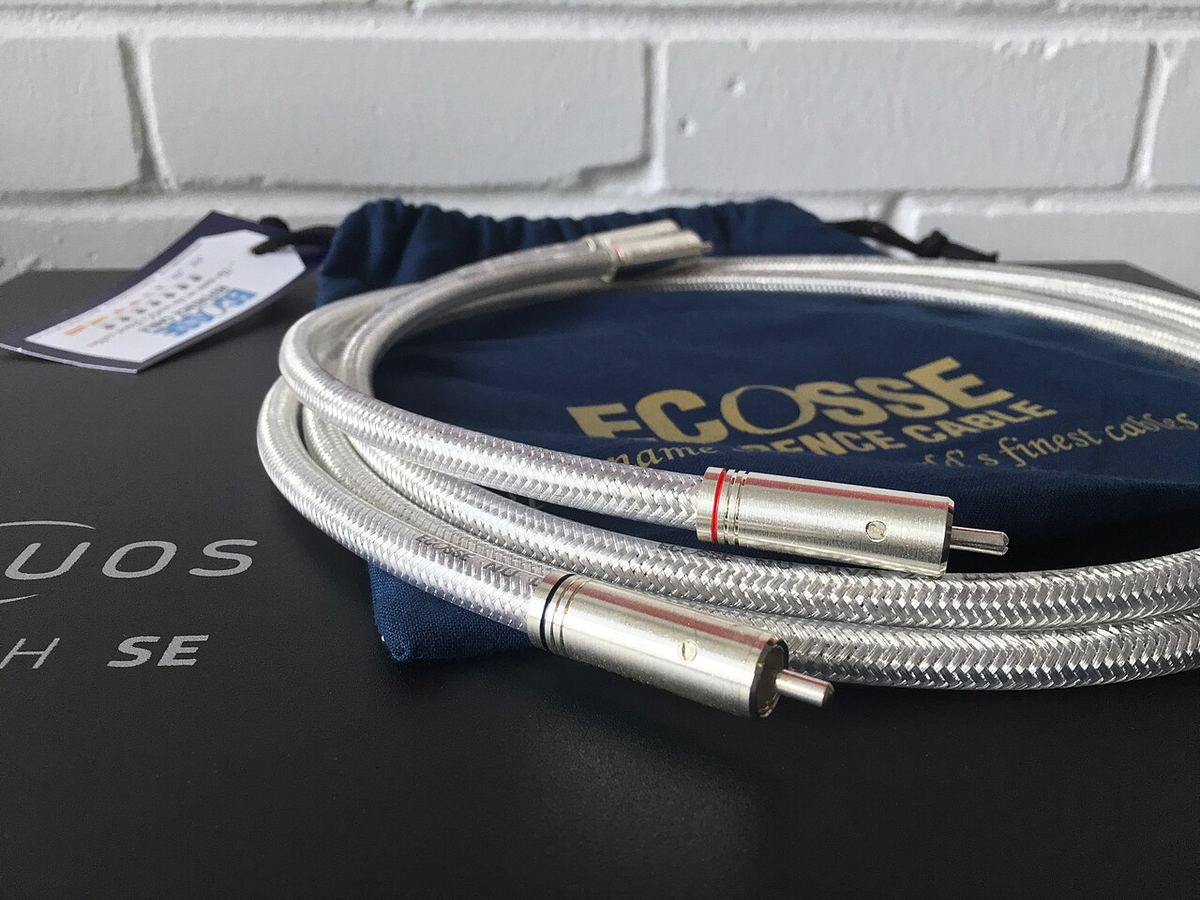
What does not follow is that spending more solves them. Adequate gauge, sound construction, and clean, tight connections eliminate essentially all of the audible problems a cable can cause. Beyond that point, differences shrink to levels that vanish in controlled listening. The rule that serves best: buy competent cable of the right gauge and length, connect it properly, and then stop thinking about it.
Myth: Everything Needs Hundreds of Hours of Burn-In
Burn-in is a case where a genuine physical effect has been stretched far past what it can support. Loudspeaker drivers do change slightly with use: the rubber or foam surround and the spider soften a little, which lowers the driver's resonant frequency by a small amount. That change is measurable, happens mostly in the first few hours of use, and is modest. Something similar applies to a few other mechanical items.
Electronics are a different matter. Resistors, capacitors, and semiconductors do not meaningfully "run in" over hundreds of hours in the way often described, and neither do cables. What almost certainly changes over a few weeks with new equipment is you — acclimatisation is powerful, and the sound you found bright on day one becomes normal by day ten. That is a real experience; it is just not the equipment.
Judge Gear in Your Own Room, Over Days
Give new speakers a few hours of ordinary use before you evaluate them, then listen over several days with familiar music at a normal volume. Do not spend weeks running pink noise into them waiting for a transformation. If a component sounds wrong after a fair listen in your room, it is probably wrong for your system — that is what the return window is for.
Myth: Hi-Res Files Are Always Audibly Better
A 24-bit/192 kHz file contains more data than a CD-quality 16-bit/44.1 kHz one, and it is tempting to assume more data means better sound. In practice, 16/44.1 already covers the full range of human hearing with a dynamic range far beyond what any listening room can use. In careful comparisons, listeners consistently struggle to distinguish a good 16/44.1 file from its higher-resolution source.
Where hi-res releases do often sound better, the reason is usually the master, not the numbers. A hi-res reissue is frequently a newer, less compressed transfer, and that difference is plainly audible. Higher sample rates also have real value in production, where processing headroom matters. For playback, the honest position is that a well-mastered CD-quality file is transparent, and format is a much smaller variable than mastering.
Myth: Specs Tell You Everything — and Its Opposite
Two opposite errors circulate side by side. The first treats the spec sheet as the whole story: pick the lowest distortion figure and you have picked the best component. The second dismisses measurements entirely in favour of listening. Both are wrong, and in the same way — they ignore which specs actually predict something.
Some numbers matter a great deal because they describe compatibility: speaker sensitivity and impedance, amplifier power into the load you will actually use, phono stage gain and loading against your cartridge, headphone impedance and sensitivity against your amplifier. Get these wrong and the system will not work properly no matter how good the components are individually. Other numbers — vanishingly low distortion figures, frequency response quoted without tolerance limits, exotic jitter specifications — are usually already far below audibility and tell you very little. The skill is not learning every spec; it is learning which handful decide whether two boxes belong together.
Compatibility First, Performance Second
Before anything else, check the numbers that determine whether components can work together: speaker impedance and sensitivity against amplifier power and load rating; cartridge output and compliance against phono stage gain and tonearm mass; headphone impedance against amplifier output. Only once those line up is it worth comparing distortion and noise figures — and by then they will rarely be your limiting factor.
Myth: The Room Is Just Where You Put the System
This one is not so much believed as overlooked, and it is the most expensive oversight in the hobby. Below roughly 300 Hz, the room is not a neutral container — it is an active participant, creating standing waves that can add or subtract more than 10 dB at particular frequencies and seats. No amount of component quality corrects that, because the peaks and nulls happen after the sound leaves the speakers.
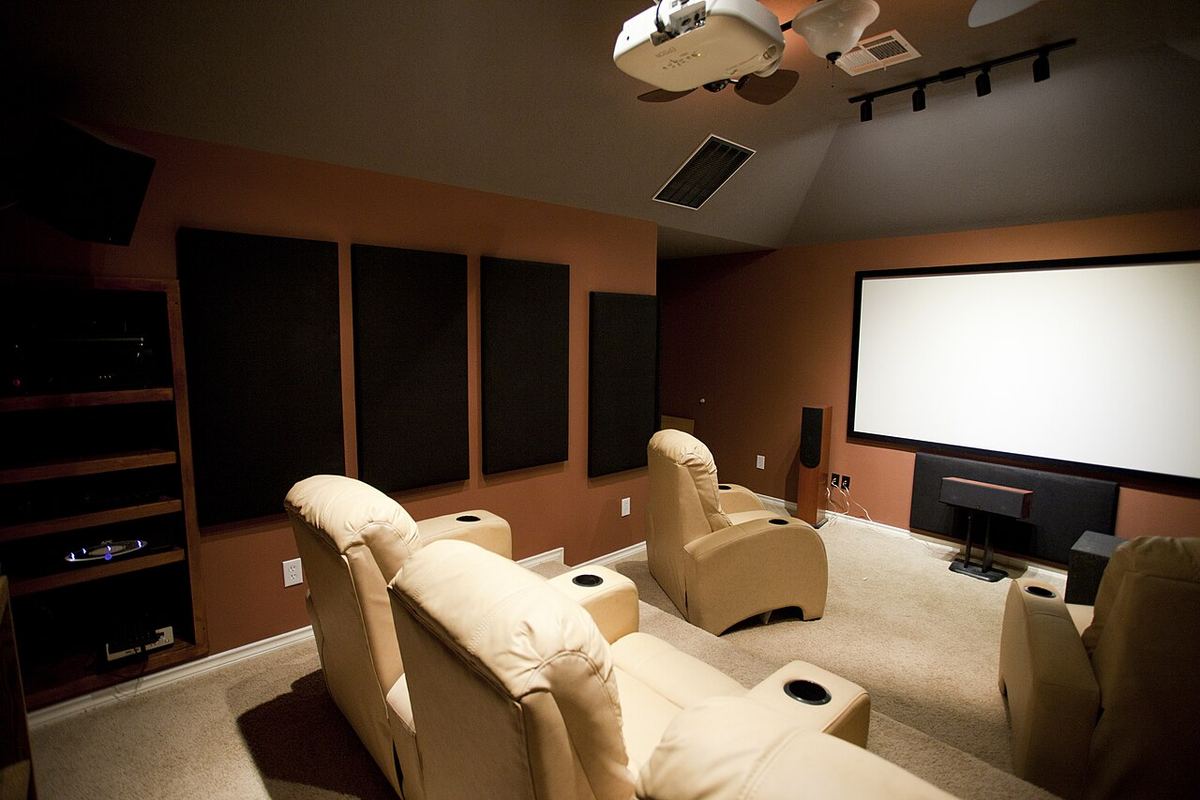
The practical consequence is a reordering of priorities. Moving speakers a foot from the front wall, pulling the listening seat out of the exact centre of the room, and putting something absorptive at the first reflection points will change what you hear more than most component upgrades at any sane budget — and the first two cost nothing at all.
What Actually Moves the Needle
Strip away the folklore and a short, dull, reliable list remains. In rough order of effect per pound or dollar spent:
- Speaker choice and placement — by far the largest single variable, and placement is free.
- Room treatment — bass trapping and first-reflection absorption, which no electronics can substitute for.
- Speaker and amplifier matching — enough clean power for the sensitivity and impedance you actually own.
- Source and recording quality — the mastering of what you play, far more than the file format.
- Correct setup — cartridge alignment, gain structure, subwoofer crossover and phase, level matching.
- Competent cables of the right gauge — necessary, cheap, and finished once done.
None of this is glamorous, which is precisely why myths persist: "move your speakers and treat your first reflections" is harder to sell than a box. But a modest system that is well matched, well placed, and set up properly will comfortably beat an expensive one that is none of those things.
Myth: Bigger Woofers Mean Deeper Bass
A larger woofer can move more air, and that is a genuine advantage for output: at a given excursion, a bigger cone produces more volume. What it does not automatically produce is deeper bass. Low-frequency extension is set by the combination of the driver's parameters, the cabinet's volume and its tuning, and designers trade these against each other within a fixed relationship sometimes called the “iron law” of loudspeakers: of deep extension, high efficiency and a small cabinet, you can have any two.
In practice, a compact speaker with a 130 mm woofer can reach lower than a larger speaker designed for efficiency, simply because its designer chose extension and accepted low sensitivity. What the bigger driver buys is the ability to play deep bass loud without running out of excursion. If you listen at moderate levels in a modest room, driver size is a weaker predictor of bass than the published low-frequency limit and, above all, how the speaker interacts with the room.
Myth: Mains Cables Transform the Sound
A component's mains lead is the last metre or two of a path that runs through many metres of building wiring and, beyond that, the distribution network. Inside the component, the power supply rectifies and smooths that mains into the steady DC the circuitry actually uses, and good supplies regulate it further. It is hard to identify a mechanism by which the final metre of conductor, provided it is correctly rated and safely made, changes what the circuit delivers.
The kernel of truth is that mains-borne problems are real. Ground loops cause hum, appliances inject noise, and DC on the mains can make transformers buzz. Those problems have specific diagnoses and specific fixes, covered in the guides on hum and power conditioning. A standard, correctly rated cable is not one of the problems.
How to Run a Fair Comparison Yourself
Most of the myths above survive because casual comparisons are not fair ones. You do not need a laboratory to do better, only a few precautions.
- Match the levels precisely. A difference of even half a decibel tends to be heard as a difference in quality rather than in volume, and the louder option usually wins. Use a test tone and a multimeter on the speaker terminals to match within about 0.1 dB.
- Hide the identity. Have someone else switch, without telling you which is which, so expectation cannot steer the result.
- Switch quickly. Auditory memory for fine detail is short. Compare short passages, switching within a few seconds rather than after a cable swap that takes minutes.
- Repeat enough times. One correct guess means little. In ten trials, getting eight or more right happens by chance only about 5% of the time, and nine or more about 1% of the time.
A comparison run this way is not the final word on anything, but it reliably separates differences you can hear from differences you expected to hear — and it is often humbling in both directions.
Quick Reference: Claim vs Reality
| Common Claim | What Is Actually True |
|---|---|
| More watts = louder | Doubling power gives 3 dB; +3 dB of speaker sensitivity does the same for free |
| Expensive cables transform sound | Adequate gauge and clean connections solve the real problems; beyond that, differences are negligible |
| Everything needs hundreds of hours of burn-in | Driver suspensions soften slightly in the first hours; electronics essentially do not change |
| Hi-res always sounds better | 16/44.1 is transparent; better-sounding hi-res releases usually have a better master |
| Lowest distortion wins | Compatibility specs decide system behaviour; distortion is usually already inaudible |
| The room is neutral | Below ~300 Hz the room dominates; placement and treatment outrank most upgrades |
| Bigger woofers mean deeper bass | Cabinet volume and tuning set extension; a bigger driver mainly buys output |
| Mains cables transform sound | Mains problems are real, but they have specific causes and fixes; a correctly rated cable is not one |
Check what your system actually needs
Enter your components and get a free AI-powered compatibility analysis — power matching, impedance, gain staging, and where an upgrade would genuinely help.
Run a Free Analysis →