
More Guides
Almost every first system is assembled the wrong way round: a component catches the eye, it gets bought, and the rest of the budget is spent filling gaps around it. The result is usually unbalanced — a superb source feeding ordinary speakers, or expensive speakers strangled by an amplifier that cannot drive them. Deciding the shares before the models avoids most of that. This guide sets out an allocation that reflects how components actually perform today, explains why the old rules of thumb have drifted, and works through three complete systems.
Why the Old 50/25/25 Rule Broke
For decades the standard advice was to put roughly half the budget into speakers and a quarter each into amplification and source. It was reasonable advice in an era when sources were mechanical, expensive, and highly variable — turntables and CD players differed enormously, and a cheap one really did hold a system back.
Digital replay changed that arithmetic completely. A competent modern DAC or streamer is inexpensive and, measured objectively, close to transparent; the difference between a good affordable one and a costly one is far smaller than the difference between two pairs of speakers at the same prices. Meanwhile, speakers and rooms remain stubbornly analogue and stubbornly variable. The sensible modern allocation therefore shifts money away from digital sources and towards the parts of the chain that still differ audibly — with one important exception: vinyl, where the source is still mechanical and still deserves a large share.
A Modern Default Split
For a digital-first system: speakers 40–45%, amplification 25–30%, source 10–15%, room treatment and stands 10–15%, cables and accessories 5%. For a vinyl-first system, give turntable, cartridge and phono stage 25–30%, funded mostly by shrinking the digital source allowance and partly by trimming speakers and amplification. These are starting points to adjust, not laws — but if your plan departs wildly from them, it is worth knowing why.
Speakers and the Room Come First
Speakers take the largest share because they are the least perfect link in the chain by a wide margin. Their distortion is orders of magnitude higher than any electronics in the system, their frequency response varies audibly between models, and they interact with the room in ways no other component does. Two amplifiers may be difficult to tell apart; two speakers never are.
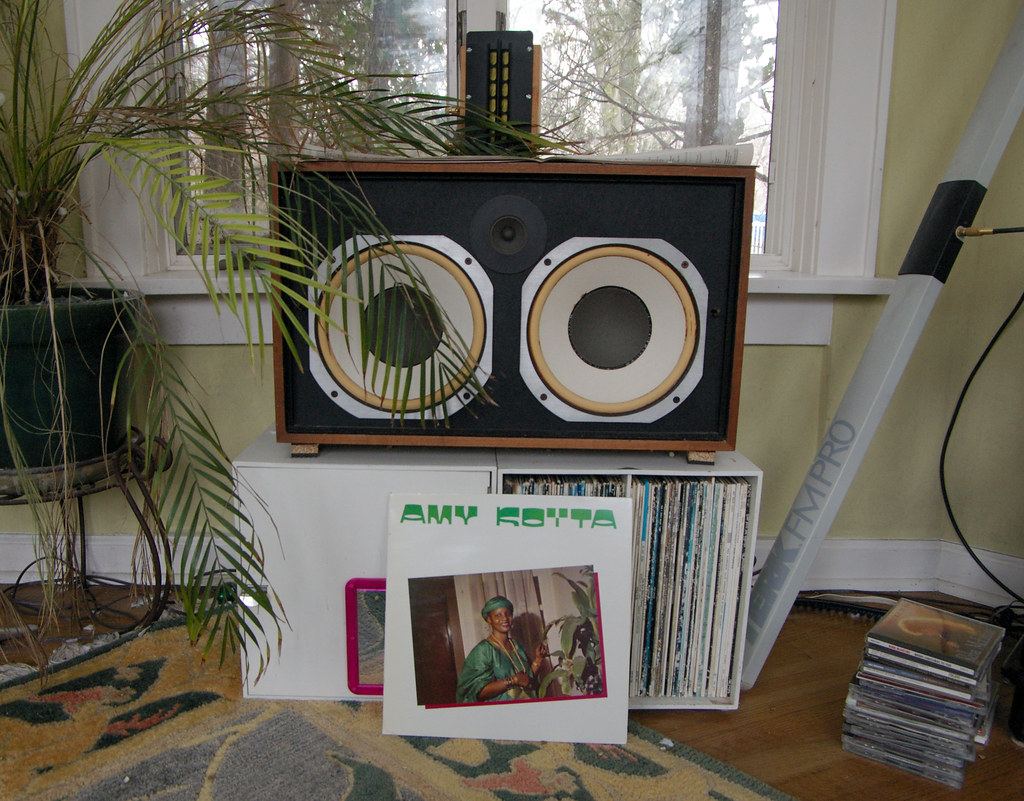
The room belongs in the same sentence, because a speaker's in-room performance is a property of the pair, not the box alone. This is why the allocation reserves a real slice — 10 to 15 per cent — for treatment and stands rather than treating them as an afterthought. Bass traps in the corners, absorption at the first reflection points, and rigid, correctly-heighted stands frequently deliver more improvement than spending the same money on a better model of speaker. Placement itself, of course, is free, and should be exhausted before anything is bought.
One practical caution: buy speakers your room can accommodate. Large floorstanders in a small room, pressed against the wall because there is nowhere else for them to go, will underperform cheaper standmounts with space to breathe. Size the speakers to the space first, then spend within that constraint.
Amplification: Enough, Then Stop
Amplification is where over- and under-spending both happen. The under-spending case is familiar: an amplifier without the power or current to control a demanding speaker load will sound thin and strained at volume, no matter how good the speakers are. The over-spending case is subtler — past the point where an amplifier delivers clean power into your actual load, additional expenditure produces very small returns.
The target is therefore sufficiency with headroom, defined by the speakers you have chosen: their sensitivity, their impedance curve, your room size, and how loudly you listen. A sensitive, benign 8 Ω speaker in a small room may be entirely happy on 30 clean watts. An insensitive speaker dipping to 3 Ω in a large room may want 150 W and real current delivery. Choose the speakers first, then let them set the amplifier budget — not the other way round.
A useful test: if the amplifier you are considering costs more than the speakers it will drive, pause. That arrangement is occasionally right — some difficult speakers genuinely demand it — but far more often it signals a system that would sound better with the ratio reversed.
Sources: Cheap Excellence, With One Exception
Digital sources are the great bargain of modern hi-fi. A well-engineered DAC or network streamer at a modest price measures close to transparent, and the audible gap up to expensive alternatives is small. Ten to fifteen per cent of the budget buys a source that will not limit anything, and money saved here is far better deployed on speakers or the room.
Vinyl is the exception that proves the rule, because a record player is a mechanical instrument rather than a transparent conduit. Platter and bearing quality, tonearm rigidity and geometry, cartridge alignment and the phono stage that follows all shape the sound audibly. A vinyl-first system reasonably devotes 25 to 30 per cent of its budget to turntable, cartridge and phono stage combined — and within that, sensible practice is to spend on the deck and arm first, since a good arm will support a better cartridge later while a poor one will hold back any cartridge you fit.
Cables, Stands, and the Accessory Line
Accessories deserve a small, honest allowance rather than either extreme. Cables need to be the right gauge for the run and terminated cleanly; that is achievable inexpensively, and five per cent of a budget covers it comfortably at any level. What genuinely earns money in this category is mechanical: rigid speaker stands of the correct height, a stable and level surface for a turntable, and isolation where a suspended floor is a problem.
Treat the five per cent as a ceiling to defend. It is the line most easily eroded by upgrade suggestions, and every pound that leaks out of it comes from somewhere that would have done more good.
Three Worked Examples
The allocation is easier to judge with numbers attached. Each of these assumes a digital-first system, buying new, with placement already optimised. Figures are in whole currency units so the proportions read clearly at any exchange rate.
| Category | Modest (1,000) | Mid (3,000) | Serious (7,500) |
|---|---|---|---|
| Speakers | 420 — quality standmounts | 1,250 — standmount or compact floorstander | 3,200 — full-range floorstanders |
| Amplification | 280 — integrated with a decent power supply | 800 — integrated with headroom into 4 Ω | 2,000 — integrated, or pre and power |
| Source | 120 — streamer or DAC | 400 — streamer/DAC combination | 900 — streamer plus separate DAC |
| Room & stands | 130 — stands, two corner traps | 450 — stands, traps, reflection panels | 1,000 — full treatment package |
| Cables | 50 | 100 | 400 |
Notice what changes across the three columns and what does not. The proportions stay roughly constant; what rises is the absolute quality available in each slot. Notice too that the source line stays small even at the top — at 7,500 the source is still doing its job for well under a fifth of the total.
How Buying Used Changes the Arithmetic
Used equipment does not change the percentages; it changes what each percentage buys. Amplifiers and speakers depreciate heavily while remaining serviceable for decades, which means the used market effectively lifts a system a tier or more for the same money. Buying a used amplifier and used speakers while keeping the source, cables and room treatment new is one of the most reliable ways to assemble a strong system on a limited budget.
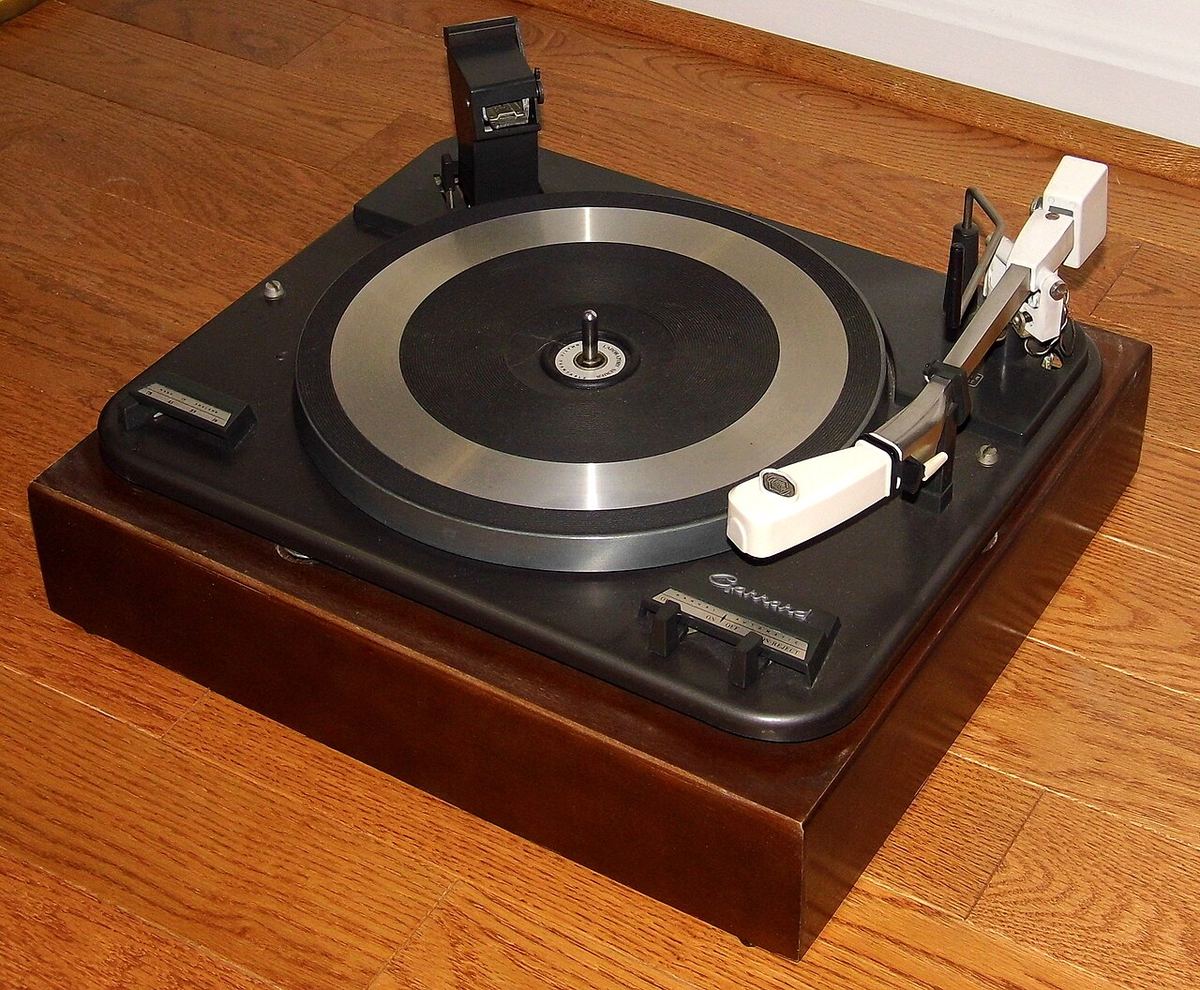
Weigh it against the risks in the usual way: check that speaker surrounds are intact, that amplifiers have no channel imbalance or noisy controls, and that a turntable's bearing and motor are healthy. Buy new where consumables and support matter — cartridges, anything with a battery, and gear whose firmware needs an active manufacturer behind it.
Adjusting the Split for How You Actually Listen
The default allocation assumes a stereo system played over speakers in a reasonably dedicated space. Real listening habits push it around, and the adjustments are worth making deliberately.
- Headphones are your main listening — shift heavily: headphones and a headphone amplifier can take 50–60% of the total, and room treatment drops out almost entirely.
- You listen quietly, in a small room — reduce the amplification share and move it to speakers; sensitivity and near-field behaviour matter more than power.
- You play loud, or the room is large — raise both the speaker and amplification shares; this is the case where headroom is genuinely bought rather than imagined.
- Vinyl is the main source — give deck, cartridge and phono stage 25–30%, funded mostly from the digital source line.
- The room is shared or acoustically fixed — keep the treatment share but spend it on what is permitted: rugs, bookcases, soft furnishings, and placement rather than visible panels.
The framework's value is not precision — no split is exactly right — but in forcing the question before the first purchase rather than after the last. A system planned as a whole, even roughly, comfortably outperforms one assembled component by component with no plan at all.
Costs That Do Not Appear on the Shopping List
A budget built only from component prices tends to run short. A few recurring and incidental costs are worth allowing for from the start.
- Styli wear out. A turntable's stylus needs replacing after several hundred to around a thousand hours of play, depending on its profile and the condition of the records, so a vinyl system carries a recurring cartridge cost.
- Streaming subscriptions add up. Over three or four years, a lossless streaming subscription costs more than a capable streamer. That is not a reason to avoid it, but it belongs in the comparison when weighing streaming against buying music.
- Small parts. Correct-length cables, a good distribution block, spikes or floor protectors and a record-cleaning kit are individually cheap and collectively significant.
- Returns and delivery. Heavy speakers cost real money to ship back, so a generous home-trial policy is worth something when comparing retailers.
Building in Stages
Not every system is bought at once, and the order of purchase matters. When a budget will be spent over a year or two, the most durable approach is to buy the speakers first at the level the final system will support, driving them temporarily with a modest amplifier. Speakers are the component least likely to be replaced, and a good pair reveals each later improvement elsewhere.
The opposite approach — buying an ambitious amplifier first and modest speakers to go with it — is common and usually less satisfying, because the speakers cap what the amplifier can show and are often the first thing to be replaced, at a loss. The one caution with speakers first is matching: the temporary amplifier must still have enough power and current not to clip them, for the tweeters' sake.
Choosing the Next Upgrade
Once a system is running, the same priorities decide where the next money should go. Work through the free options first, since they often solve the problem outright: speaker placement, listening position, tweeter height and toe-in. Then ask what the system is actually failing to do. Uneven or boomy bass points to the room; harshness at high volume points to an amplifier running out of headroom or to the speakers; a lack of detail that persists across recordings points to the speakers more often than the source. A digital source is rarely the limiting factor once it is competent, so it should usually be the last thing upgraded rather than the first.
Quick Reference: Starting Allocations
| Category | Digital-First | Vinyl-First |
|---|---|---|
| Speakers | 40–45% | 35–40% |
| Amplification | 25–30% | 20–25% |
| Turntable, cartridge and phono stage | — | 25–30% |
| Digital source (streamer/DAC) | 10–15% | 0–5% |
| Room treatment and stands | 10–15% | ~10% |
| Cables and accessories | ~5% | ~5% |
Split your budget with the Budget Builder
Enter a total figure and get a suggested allocation across speakers, amplification, source, and accessories — then check the resulting chain for compatibility.
Open the Budget Builder →