
More Guides
Read any amplifier review and you will meet a letter: Class A, Class AB, Class D. The letter describes one specific thing — how the output devices behave across the audio waveform — and it has real consequences for efficiency, heat, size and cost. What it does not do is settle how an amplifier sounds. Excellent and mediocre amplifiers exist in every class, and the gap between two implementations of the same class is routinely larger than the gap between classes. This guide explains what each letter actually means, then draws the line between what the class predicts and what it does not.
What "Class" Is Describing
An amplifier's output stage has to reproduce a signal that swings above and below zero. The classification describes how much of that waveform each output device conducts for — the conduction angle — and, in the case of Class D, whether the devices are behaving as linear amplifiers at all.
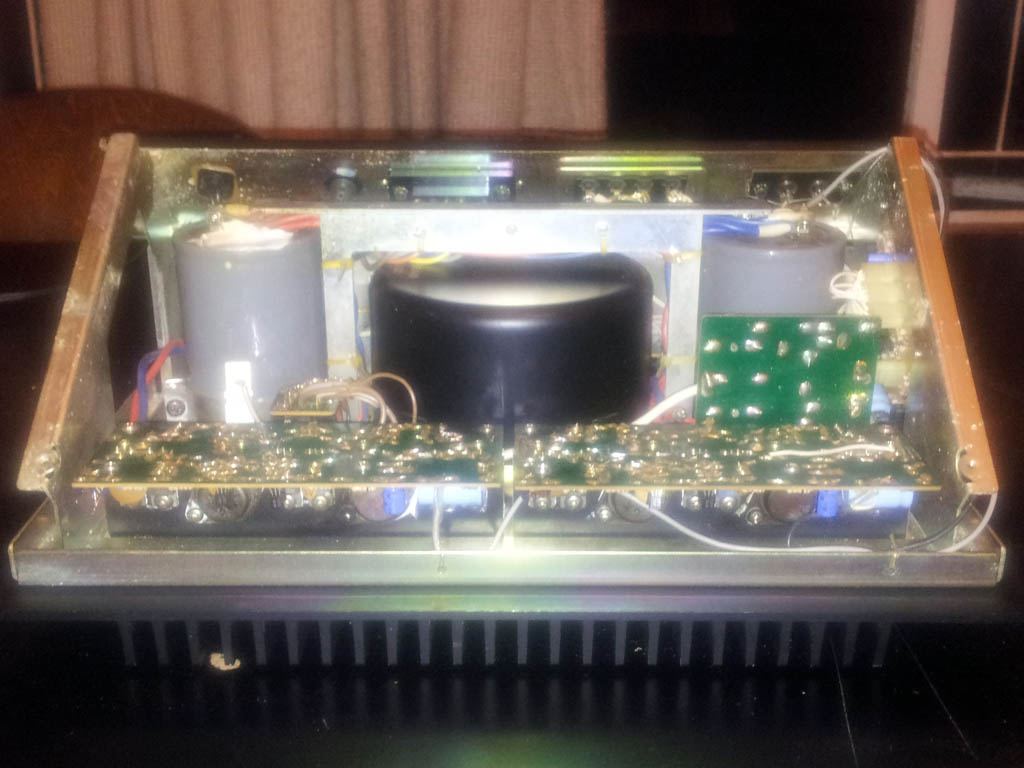
Think of it as a spectrum with a trade-off at each end. Keeping output devices conducting all the time is linear and free of a particular kind of distortion, but wastes enormous energy as heat. Switching them off when they are not needed is far more efficient, but introduces the problem of handing over cleanly between devices. Every class is a different answer to that trade.
Always Conducting, Always Hot
The output devices conduct for the entire waveform — a full 360 degrees — and never switch off. Because no device is ever handing over to another, there is no crossover distortion at all, and the operating point stays in the most linear part of the device's range. The price is efficiency: typically 20–30% at full output and far worse at normal listening levels, since the amplifier draws close to full current whether it is playing loudly or sitting idle. A 25 W Class A amplifier can dissipate well over 100 W of heat continuously. That means large heatsinks, heavy power supplies, high cost per watt, and a real electricity bill.
The Practical Compromise
Each output device conducts for slightly more than half the waveform — the two halves overlap around the zero-crossing point. That small overlap, set by the amplifier's bias current, is what avoids the abrupt handover that would otherwise create crossover distortion. In effect a Class AB amplifier runs in Class A for the first fraction of a watt and transitions to Class B behaviour above that. Efficiency lands around 50–65% at full output, heat is manageable, and the design has been refined for over half a century. It remains the mainstream choice for good reason.
Switching, Not "Digital"
Class D output devices are not used as linear amplifiers at all. They switch fully on or fully off at a high frequency, with the ratio of on-time to off-time tracking the audio signal, and an output filter reconstructs the waveform. Because a switch that is fully on or fully off dissipates very little power, efficiency reaches 85–95%. That yields small, cool, light, powerful amplifiers — which is why Class D dominates subwoofer plate amplifiers, active speakers and compact integrateds. The "D" stands for nothing; it is simply the next letter after C, and Class D is not a digital amplifier.
Class G and Class H: Rail Switching
Two further classes turn up mainly in high-power amplifiers, and both are variations on the same idea: instead of running the output stage from one fixed high-voltage supply all the time, vary the supply to suit the signal.
Class G uses two or more fixed supply rails and switches to the higher one only when a loud passage demands it. Class H modulates the rail voltage continuously so it tracks just above the signal. Both keep a conventional linear (usually Class AB) output stage, so their behaviour resembles Class AB, but they waste far less power as heat during quiet passages. The result is high peak power without a huge heatsink — useful in professional amplifiers and some high-output home designs.
What the Class Actually Predicts
The class reliably tells you about the physical and practical characteristics of an amplifier: how hot it runs, how much it weighs, how much power it can package into a given size, and roughly how much it costs per watt. Those are genuinely useful things to know when you are choosing a component for a real room and a real shelf.
What the class does not reliably predict is sound quality. A well-executed Class D amplifier can measure superbly and drive difficult loads with authority. A poorly-executed Class A amplifier with an inadequate power supply can sound worse than a competent Class AB at a third of the price. Modern Class D in particular has moved on enormously from its early reputation — output filter design, feedback around the filter, and switching-frequency choices have improved to the point where the best implementations are among the most transparent amplifiers available at any price.
The useful rule: treat the class as information about heat, size, efficiency and cost, not as a quality ranking. Then judge the specific amplifier on what actually matters for your system — power into your speakers' impedance, current delivery, noise floor, and how it behaves at the volumes you really use.
Where Each Class Makes Practical Sense
Because the classes differ mostly in physical consequences, matching them to circumstances is straightforward.
- Class A suits low-power systems with sensitive speakers, in rooms where the heat is tolerable and running costs are not a concern. It is the least practical and the most romantic option.
- Class AB suits almost everything. It scales from modest integrateds to serious power amplifiers, delivers plenty of current for difficult loads, and manages heat without extreme measures.
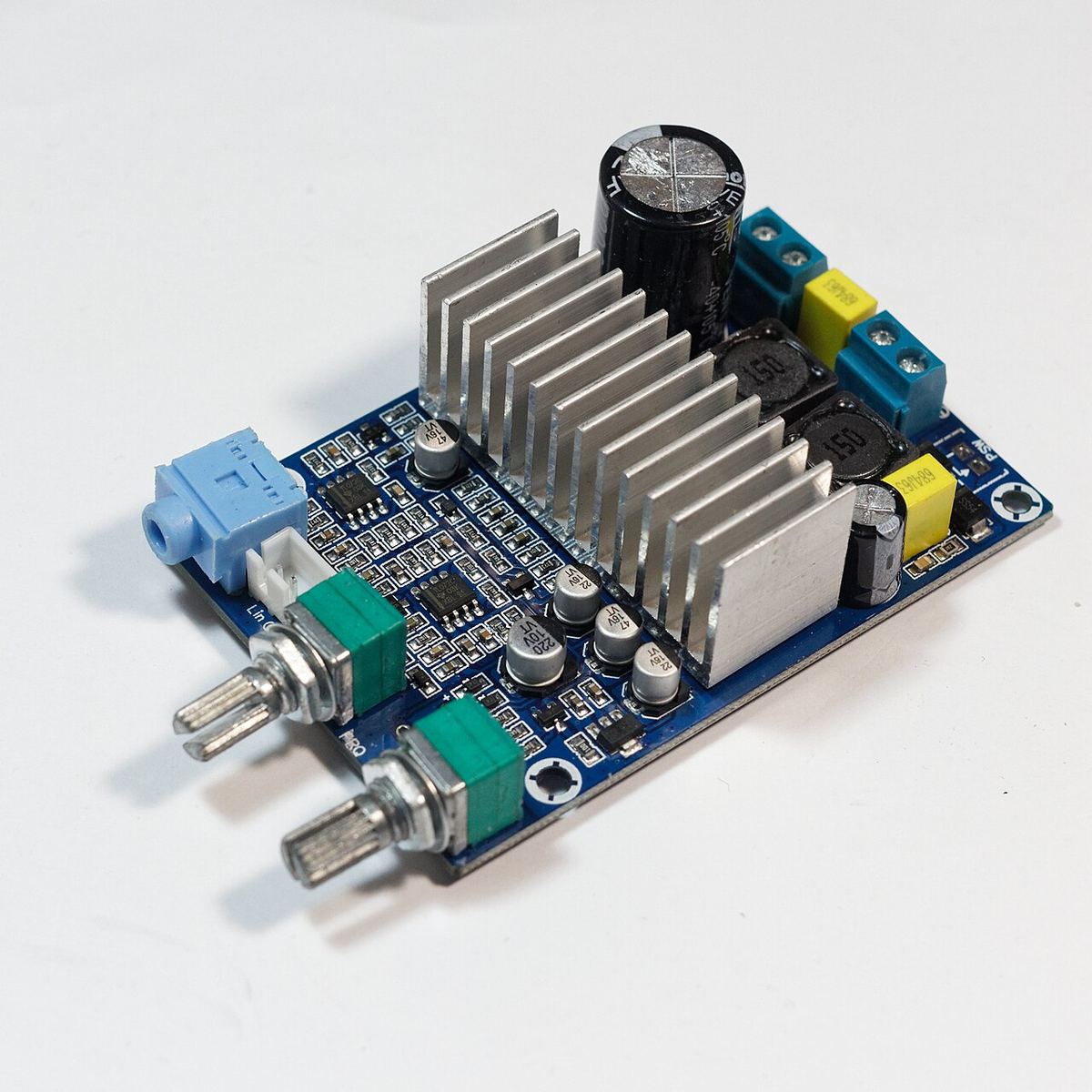
- Class D suits high power in a small space, active speakers, subwoofers, multi-channel systems, and anywhere efficiency or heat is a constraint. It is also the sensible choice if the amplifier will be left switched on continuously.
- Class G and H suit high-output applications where peak capability matters more than average power — large rooms, insensitive speakers, and professional use.
One consequence worth planning for: a Class A amplifier needs genuine ventilation. Placing one in a closed cabinet is not a cosmetic decision but a reliability one, and the same caution applies at a lower level to high-bias Class AB designs.
Bias, Idle Current and "First Watt" Class A
A detail that causes confusion: many Class AB amplifiers are described as operating "in Class A for the first few watts". This is literally true and follows from how bias works. Below the current level set by the bias, both output devices are still conducting, so the amplifier is genuinely in Class A operation; above it, one device hands over to the other and it becomes Class AB.
Whether that matters depends on your listening level. With sensitive speakers at moderate volume, average power demand can genuinely sit within the first watt for much of the time — which is the argument behind high-bias designs. With insensitive speakers in a large room, the amplifier spends most of its time well outside that region and the distinction is academic. As so often, the answer depends on the speakers and the room rather than on the amplifier alone.
Efficiency at the Levels You Actually Use
The efficiency figures quoted for each class are measured at or near full output, and very little listening happens there. At normal levels with speakers of average sensitivity, the average power demand is commonly around a watt or less, with brief peaks far higher. At that operating point, what the amplifier wastes is dominated by its idle draw rather than its full-power efficiency.
The theory makes the point clearly. A pure Class B output stage, the most efficient linear arrangement, has a theoretical maximum efficiency of about 78.5% at full output, but that maximum falls in proportion to output voltage. At one-hundredth of full power — 1 W from a 100 W amplifier — the theoretical ceiling drops below 8%, before bias current and the rest of the circuit are counted. Class A is worse still, since it draws its full current regardless. Class D is the one class whose efficiency holds up reasonably well at low output, which is a large part of why it suits equipment that is left on.
Heat and Running Cost in Practice
Idle consumption turns these differences into numbers on an electricity bill. A stereo Class A amplifier rated at 25 W per channel might draw around 225 W continuously whether playing or not. Used four hours a day, that comes to about 330 kWh a year, multiplied by your local tariff. A Class AB integrated of 100 W per channel might idle at 40–80 W, and many Class D designs idle at 10–30 W, or less in standby. These are illustrative figures rather than specifications, so check the power consumption given in a particular model's manual or measured in reviews.
The heat side follows directly: almost all of a Class A amplifier's draw ends up warming the room. In a small room in summer, a couple of hundred watts of continuous heat is comparable to having an extra person or two in the room, which is a practical consideration as well as an environmental one.
Class D: What Changed
Class D's early reputation for a hard or variable treble came largely from one source: the output filter. The filter that removes the switching frequency is tuned assuming a particular load, and in early designs without feedback after the filter, the frequency response in the top octave changed with the speaker's impedance — rising into some loads, falling into others. Paired with a speaker whose impedance varied at high frequencies, the treble balance became unpredictable.
Modern designs address this directly, typically by taking feedback from after the output filter or by using self-oscillating topologies that include the filter in the control loop. Switching frequencies of several hundred kilohertz to over a megahertz put the residual far above the audio band. The best current Class D modules measure with distortion and noise comparable to the finest linear amplifiers, and their response is largely independent of the load. One residual quirk is that a small amount of switching-frequency energy remains at the output; it is inaudible, but it is why measuring a Class D amplifier properly requires a specific filter on the test equipment.
The Same Letters in Valve Amplifiers
The classes are not specific to transistors. A single-ended valve amplifier, with one output valve per channel conducting continuously, is always Class A, which is why such designs are typically low-powered and run hot. Push-pull valve amplifiers use pairs of output valves and are commonly biased in Class AB, gaining power and efficiency in exactly the same way as their solid-state counterparts. When a valve amplifier is described as Class A, it tells you the same thing it does for a transistor amplifier: low power for its size and heat, and no crossover region.
Quick Reference: Classes Compared
| Class | Operation | Efficiency | Typical Use |
|---|---|---|---|
| Class A | Devices conduct for the full waveform; no crossover region | 20–30% | Low-power designs with sensitive speakers; runs very hot |
| Class AB | Slight overlap around zero crossing, set by bias current | 50–65% | Mainstream integrateds and power amplifiers |
| Class D | Devices switch fully on/off at high frequency; output filtered | 85–95% | Subwoofers, active speakers, compact and high-power designs |
| Class G | Linear output stage with stepped supply rails | Better than AB | High-power amplifiers needing peak headroom |
| Class H | Linear output stage with continuously tracked rail voltage | Better than AB | Professional and high-output home amplifiers |
Match an amplifier to your speakers
Enter your amplifier and speakers and get a free analysis of power delivery, impedance loading, and whether the pairing has the headroom your room needs.
Run a Free Analysis →