
More Guides
Most "how many watts do I need" advice ends in a shrug and a range. That is a shame, because the question has an answer you can work out on the back of an envelope. Every input you need is printed on a spec sheet or measured with a tape measure, and the relationship between them is fixed physics. This guide walks the process end to end: five steps that turn a speaker's sensitivity rating into a target power figure, plus the impedance check that keeps that figure honest. If you would rather skip the pencil work, our calculator runs the same math from your numbers.
Want the answer now? The Amplifier Power Calculator takes your speaker sensitivity, listening distance, and target level and returns a watts figure with headroom already folded in. Read on to understand what it is doing, or run it first and use the steps below to sanity-check the result.
Step 1 — Read the sensitivity rating
Sensitivity is the single number that sets everything else in motion, so it is where matching begins. It is written as decibels of output for one watt of input, measured one meter away — usually printed as dB/W/m or, equivalently, dB at 2.83 V/1 m. A speaker rated 88 dB/W/m produces 88 dB SPL at one meter when fed a single watt.
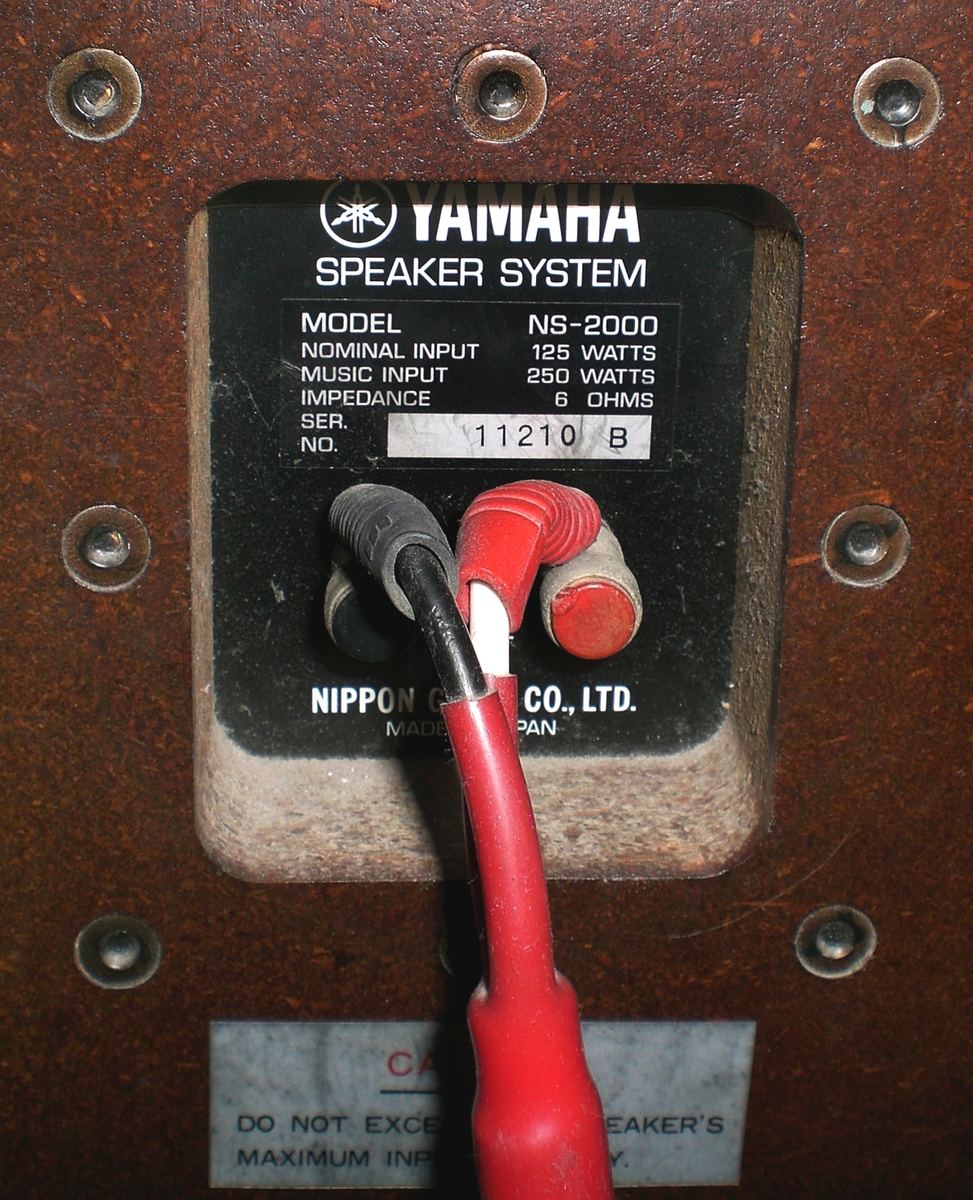
Speaker Sensitivity (dB/W/m)
Treat this as your starting loudness "for free." Every speaker gives you a different amount of sound per watt, and the spread is wide: an 84 dB monitor and a 96 dB horn differ by 12 dB, which is a sixteen-fold difference in the power each needs to hit the same level. Write your speaker's figure down before you look at a single amplifier.
If a datasheet quotes sensitivity but not the measurement condition, assume the 1 W/1 m convention and treat the number as approximate — manufacturer methods vary, and a couple of decibels of optimism is common. What matters for matching is the ballpark: is this a thrifty speaker or a hungry one?
Step 2 — Decide how loud, and how far away
Watts only mean something once you have named a target. Two variables set it: the sound pressure level you actually want at your chair, and how far that chair sits from the speakers. Loudness falls off with distance, so the same speaker asks for more power in a big room than a small one.
Pick a realistic average listening level, then remember that music is not flat. Well-recorded material has short peaks that ride 15–20 dB above the average, and those peaks are what actually strain an amplifier. So your real target is the peak level, not the average.
| Listening Style | Average SPL at Seat | Peak SPL (avg + ~15 dB) |
|---|---|---|
| Background / low-level | 70–75 dB | ~90 dB |
| Engaged, "sounds great" | 80–85 dB | ~100 dB |
| Loud, dynamic peaks | 90–95 dB | ~110 dB |
For distance, a rough rule for a normal room: expect to lose in the neighborhood of 3–5 dB once you move from the one-meter measurement point out to a typical 2.5–3 m listening seat. It is not the full free-field falloff, because room boundaries reflect energy back to you — which is exactly the kind of correction the calculator handles precisely instead of by rule of thumb.
Step 3 — Do the power-versus-loudness math
Here is the part that trips people up, because loudness and power do not scale together. The relationship is logarithmic, and two conversion factors are worth memorizing:
- +3 dB = double the power. Going from 50 to 100 watts buys one 3 dB step — audible, but modest.
- +10 dB = ten times the power, which is what most listeners perceive as "twice as loud."
Because each doubling adds a fixed 3 dB, you can build a ladder from your speaker's 1-watt figure and simply count up to the level you need. Take an 87 dB/W/m speaker as a worked example:
| Power | SPL at 1 m | Step |
|---|---|---|
| 1 W | 87 dB | baseline (sensitivity) |
| 2 W | 90 dB | +3 dB |
| 4 W | 93 dB | +6 dB |
| 8 W | 96 dB | +9 dB |
| 16 W | 99 dB | +12 dB |
| 32 W | 102 dB | +15 dB |
Say you want engaged listening — roughly 100 dB peaks at the seat. At one meter the ladder shows about 32 W gets that 87 dB speaker to 102 dB. Add back the few decibels lost over the distance to your chair and you land somewhere around 50 W to cover the peaks cleanly. Drop the speaker to 84 dB/W/m and the same target roughly doubles the requirement; bump it to 90 dB/W/m and it roughly halves. That single spec is doing most of the work.
Skip the ladder: the Amplifier Power Calculator does this exact arithmetic — sensitivity, distance, target SPL, and peak headroom — and returns the watts you need without the hand-counting. Enter your numbers and compare its figure to the estimate you just built.
Step 4 — Add headroom, and understand why
The number from Step 3 is the bare minimum to reach your peaks. You do not want to run an amplifier at its ceiling, so size up. A practical target is two to four times the minimum wattage — that is +3 to +6 dB of margin, keeping the amp loafing in its cleanest, lowest-distortion region even on the loudest transient.
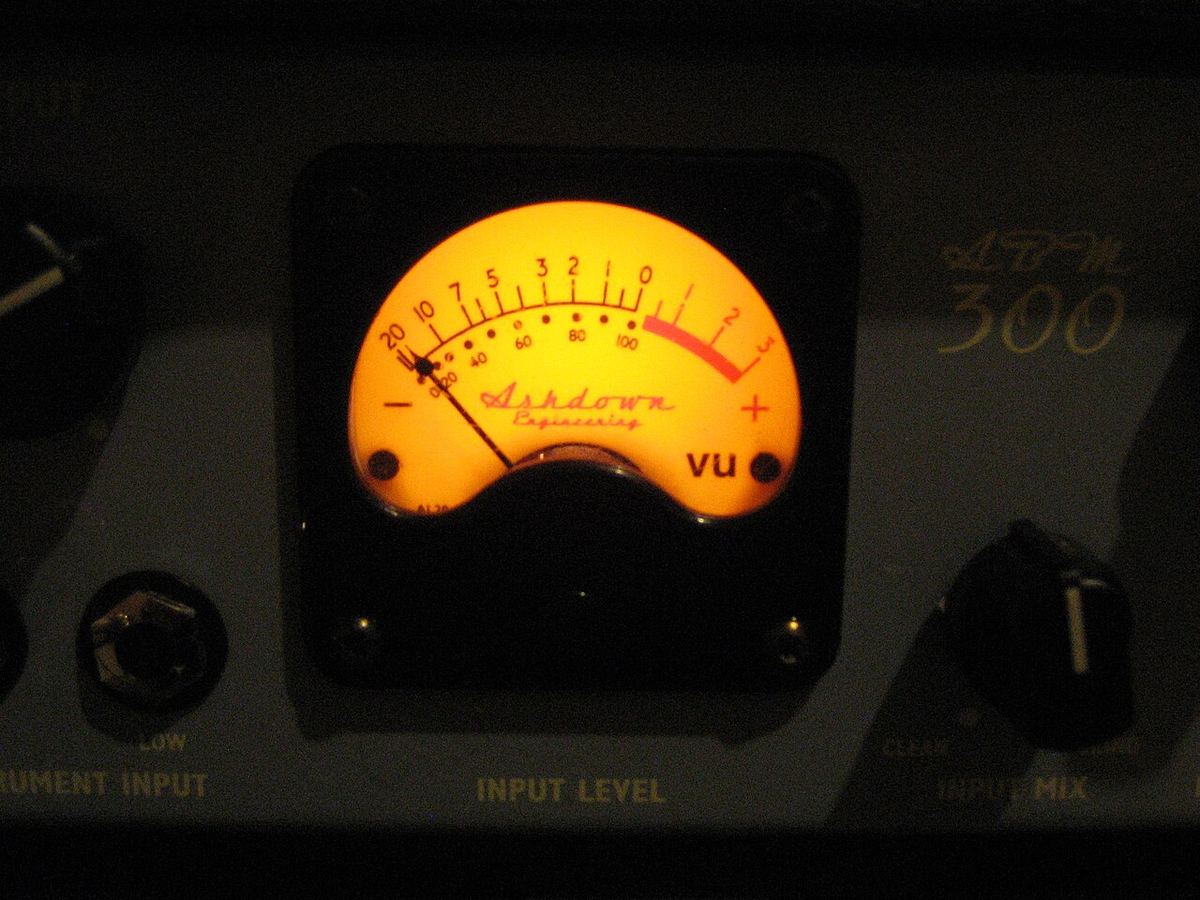
This is where the folklore about "underpowering damages speakers" comes from, and it is worth stating precisely. Raw power is not what kills tweeters — clipping is. Drive a too-small amplifier past its limit and the waveform flattens toward a square wave, which dumps a burst of extra high-frequency energy into the tweeter. A small amp pushed hard is more dangerous to your speakers than a larger, clean amp playing the same volume comfortably.
Target 2–4× the Minimum Clean Power
Headroom is not about playing louder; it is insurance against clipping on peaks you did not plan for. Note that this is a floor for the amplifier, not a ceiling set by the speaker's "power handling" rating — that figure is a thermal survival limit, not a matching target, and you rarely need to reach it.
Step 5 — Check impedance and current
A watts figure alone can still mislead you, because an amplifier has to deliver those watts into a real, varying electrical load. Speaker impedance is not a fixed number: a speaker "rated 4 Ω" can dip lower at certain frequencies, and the lower the impedance, the more current the amplifier must supply. This is the step where a spec sheet's headline wattage gets tested against reality.
Is the Amplifier Stable Into Your Speaker's Impedance?
A well-designed amp delivers roughly double its 8 Ω power into 4 Ω, because the lower load draws more current. If an amp rates 100 W into 8 Ω but only 110 W into 4 Ω — instead of the expected ~200 W — it is current-limited and will run out of steam on a demanding speaker regardless of that "100 W" badge.
So the matching check is: find your speaker's nominal and minimum impedance, then confirm the amplifier is specified to be stable there — not just rated into 8 Ω. A "100-watt" amplifier that folds up into a 4 Ω load can underperform a genuinely current-capable 60-watt design. Our Speaker Impedance Calculator helps when you are wiring multiple pairs or series/parallel loads that change what the amp actually sees.
Common real-world mismatches
Most matching failures are one of two shapes, and both come from ignoring sensitivity:
- A big amp starving an efficient horn. High-sensitivity speakers (94 dB+) need only a handful of clean watts. Pair them with a huge, noisy power amp and you gain nothing but audible hiss — the speaker is so efficient it reveals the amplifier's own noise floor. These thrive on modest, quiet amplifiers.
- A modest amp drowning in an insensitive planar. Low-sensitivity designs — many planars and small sealed monitors sit at 83–86 dB — swallow power. Hand them 20 clean watts and they sound thin and compressed, then clip and threaten the tweeters the moment you push for a real peak. They want current and headroom.
The same amplifier can be badly overpowered for one speaker and hopelessly underpowered for another. That is the whole point of matching: the amp and the speaker are one system, and the sensitivity number is what connects them.
A Worked Example: The Big Room
The five steps are most revealing when the room is large and the speakers are hungry. Take a speaker rated at 85 dB/W/m, a listening seat 4 m away, and a target of 105 dB peaks for dynamic material played loud. In free space the level would fall 12 dB between 1 m and 4 m; in a real room, reflections recover some of that, so allow about 6 dB. The speaker therefore needs to produce 111 dB at 1 m — 26 dB above its 1-watt figure, which is about 400 W.
Two speakers playing together help. With both channels contributing, the level at the seat typically rises by around 3 dB, which roughly halves the requirement per channel to about 200 W. That is still a serious amplifier, before any headroom is added. Swap in a 92 dB/W/m speaker and the same exercise asks for 19 dB above 1 W: about 80 W, or 40 W per channel with both playing. Seven decibels of sensitivity has cut the amplifier requirement by a factor of five.
The example also shows where the arithmetic is soft. The room correction, the stereo gain and the target peak level are all estimates, and each is worth a few decibels either way. That is exactly why Step 4's headroom exists: the calculation tells you which class of amplifier you need, not the precise wattage.
Reading Power Specifications Honestly
The headline wattage on an amplifier is only comparable with another if both were measured the same way. A few details separate a meaningful rating from a flattering one.
- Continuous, not peak. Look for continuous (often labelled RMS) power. "Peak", "maximum" or "music power" figures can be double the continuous rating or more.
- Both channels driven. A rating with one channel driven lets the power supply concentrate on a single channel and overstates what the amplifier delivers when both are working.
- Distortion at the rating. Power is usually quoted at a stated distortion, typically 0.1% or 1%. A rating at 10% distortion describes an amplifier already deep into clipping.
- Full bandwidth and the stated load. A proper rating gives the load (8 Ω, 4 Ω) and the frequency range, typically 20 Hz–20 kHz. A figure measured only at 1 kHz is less demanding.
Independent measurements in reviews, where power is measured into 8 and 4 Ω with both channels driven, are the most reliable check of all, and they often reveal that a modestly specified amplifier from a conservative manufacturer outperforms a more impressive-looking one.
Quick Reference: Matching in Five Steps
| Step | What to Find | Rule of Thumb |
|---|---|---|
| 1. Sensitivity | Speaker dB/W/m (or dB at 2.83 V) | Every 3 dB of sensitivity halves the power needed |
| 2. Target level | Peak SPL at the seat and listening distance | Peaks ride ~15–20 dB above the average level |
| 3. Power math | Watts to reach the peak at 1 m, plus distance loss | +3 dB = 2× power; +10 dB = 10× power |
| 4. Headroom | Multiply the minimum | 2–4× the minimum clean power |
| 5. Impedance | Speaker minimum impedance; amp's 4 Ω rating | A current-capable amp nearly doubles its power from 8 to 4 Ω |
| Specification check | How the power was measured | Continuous, both channels driven, full bandwidth, low distortion |
Calculate the power you actually need
Enter your speaker's sensitivity, your listening distance, and the level you want to hit. The calculator runs the loudness-to-power math and the peak headroom for you, and returns a target wattage in seconds.
Open the Amplifier Power Calculator →Matching a whole system? Once you have a wattage target, run your specific amplifier, speakers, and source through the free compatibility analyzer to check power headroom, impedance stability, and gain staging together.