
More Guides
Every multi-way loudspeaker needs a crossover to split the signal between drivers. The difference between active and passive speakers is where that split happens and how the drivers are amplified. In a passive speaker, one amplifier drives a passive crossover network that filters the high-power signal. In an active speaker, an electronic crossover splits the low-level signal first, and a dedicated amplifier drives each driver directly. That architectural choice cascades into several real performance differences.
Passive Crossovers
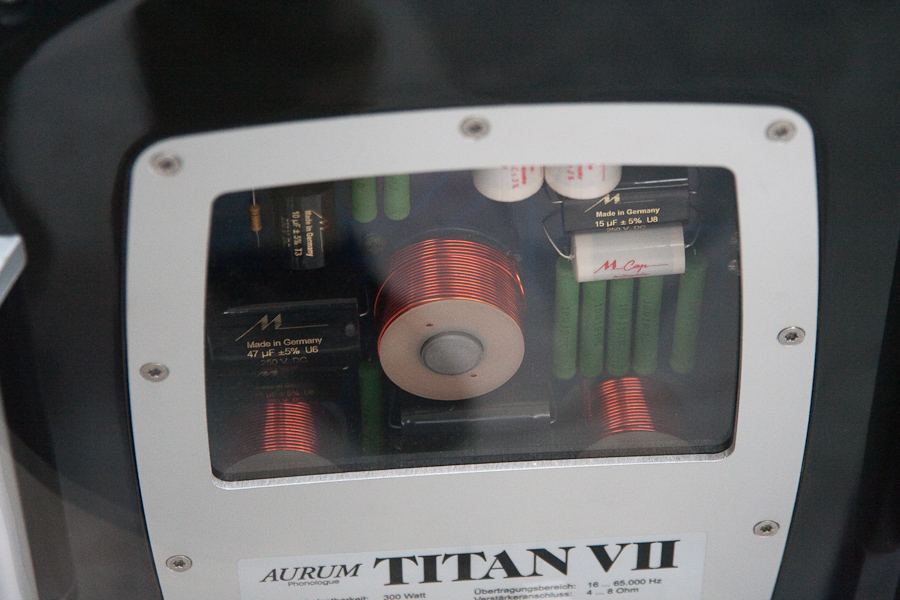
Passive Crossover
A passive crossover uses inductors, capacitors, and resistors to filter the amplifier’s full-power output before it reaches each driver. It is simple, requires only one external amplifier, and gives you free choice of that amplifier. The downsides are real: the crossover components dissipate power (insertion loss), interact with the driver’s changing impedance, and are expensive to make to tight tolerances at high power. The crossover also sits between amplifier and driver, reducing the amp’s direct control over driver motion.
Active Crossovers
Active Crossover + Amp Per Driver
An active speaker filters the signal at line level (before amplification), then uses a separate amplifier for each driver. Each amp drives its driver directly, with no passive components in between, giving tighter control and no insertion loss. The designer can tune each amplifier to its driver, apply precise filtering, and protect drivers electronically. Because the crossover works on a low-level signal, it can be far more accurate and complex than a passive network of equivalent cost.
The Case for Active
Optimised Matching and Direct Drive
In an active design the manufacturer controls the entire chain — amplifier, crossover, and driver are engineered as one system, so the amp is exactly sized and tuned to the driver it powers. Direct connection means a high damping factor and precise control with no passive network sapping power or smearing the signal. This is why active monitors dominate professional studios, where accuracy and consistency matter most.
The Case for Passive
Flexibility and Simplicity
Passive speakers let you choose, upgrade, and voice the amplifier separately — a large part of the hi-fi hobby. They need no power at the speaker location, are simpler to place, and decouple the speaker’s lifespan from its electronics (a 20-year-old passive speaker still works; built-in amps and DSP can fail or become obsolete). For listeners who enjoy matching components, passive remains the more open, serviceable path.
Powered vs Truly Active, and DSP
Beware the terminology: a "powered" speaker has a built-in amplifier but may still use a passive crossover after that amp — it is not the same as a true active design with an amp per driver. Many modern active speakers add DSP (digital signal processing) to implement the crossover and to correct driver and even room response with precision impossible in the analog domain. DSP enables linear-phase crossovers and room correction, but adds an A/D–D/A stage and ties the speaker to its firmware. Confirm whether a speaker is truly active (amp per driver) and whether its crossover is analog or DSP-based.
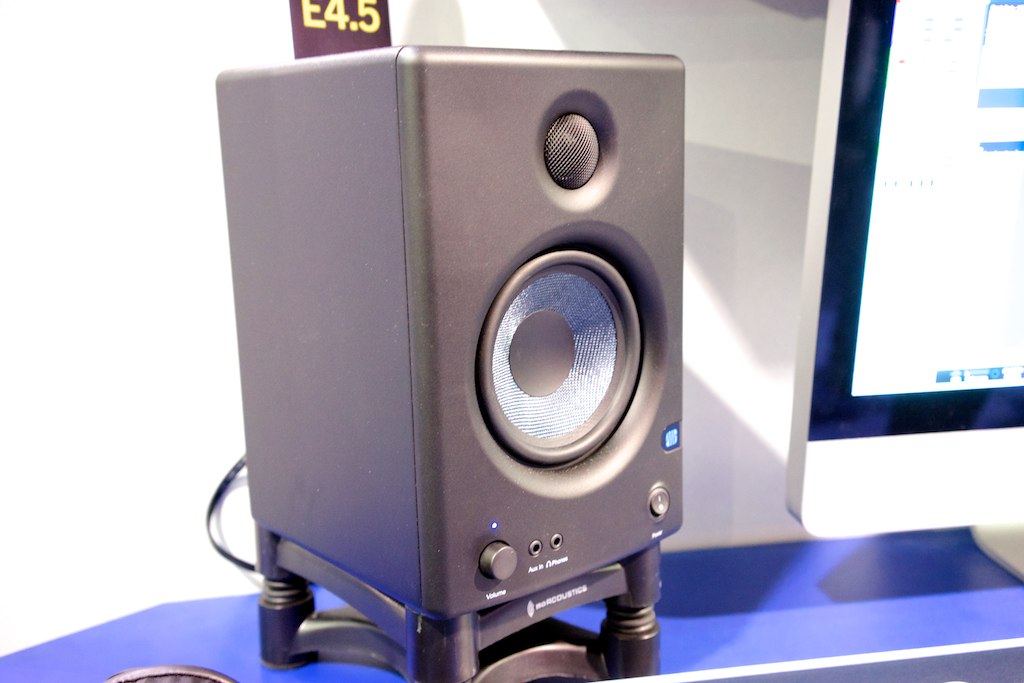
Quick distinction: Active = electronic crossover before amplification, one amp per driver. Powered = has a built-in amp, but possibly with a passive crossover after it. Passive = one external amp, passive crossover filters the high-power signal. "Powered" does not guarantee "active."
Comparing the Real Cost
Active speakers often look expensive next to passive speakers of similar size, but the comparison is not like-for-like. A pair of active speakers includes amplification for every driver — four or six amplifier channels in a two- or three-way pair — plus the crossover electronics, and increasingly a DAC, streaming, and room correction. A fair comparison is the active pair against passive speakers plus an amplifier, a DAC, and the speaker cable and interconnects needed to join them.
Run that comparison and active systems frequently come out ahead on value, especially at modest budgets where a single box replaces a stack of separates. Where passive systems win is in flexibility over time: you can change the amplifier, keep the speakers for twenty years, and spread the spending across several purchases instead of one.
Connecting Active Speakers Correctly
Because an active speaker contains its own amplifiers, it needs a line-level signal with some form of volume control upstream — a preamplifier, a DAC with a volume control, an audio interface, or the speaker's own built-in input switching. Never connect an active speaker to the speaker terminals of an amplifier unless it specifically offers a speaker-level input.
- Inputs — professional monitors usually offer balanced XLR or TRS inputs, which are worth using over long cable runs; consumer active speakers more often use RCA, optical, USB or wireless.
- Primary and secondary — many consumer active pairs put the inputs and controls in one "primary" speaker, which then feeds the other by cable or a wireless link. Wired links are generally more robust than wireless ones.
- Mains power at both speakers — each speaker needs its own outlet, so plan cable routes before you commit to a position.
- Input sensitivity — studio monitors often have a switch or trim (for example +4 dBu versus −10 dBV). Set it so that the source's volume control works in its middle range rather than at the very bottom, just as you would gain-match separates.
Placement Controls and Room Correction
One genuine advantage of active speakers is that the maker can build in tools to adapt the speaker to its position. Many monitors have boundary switches that reduce bass output when the speaker is placed near a wall or in a corner, compensating for the extra bass that boundary gain adds. Others have treble tilt or desk-position settings that correct for reflections off a desktop.
DSP-based models may also offer measured room correction using a microphone or a phone app. Used sensibly, it is very effective at taming the one or two room-mode peaks that make bass boomy. Its limits are physical: correction can reduce a peak, but it cannot fill a deep null caused by cancellation, because adding power at that frequency simply produces more cancellation. Good placement first and correction second is still the right order, and the room acoustics guide covers the placement side.
Longevity and Repair
A passive speaker contains drivers, wire and a crossover: parts that can last for decades and that any competent technician can repair. An active speaker adds amplifiers, power supplies and often software, and that changes the ownership picture in a few ways:
- An amplifier fault takes the whole speaker out of action. Check the warranty length and whether the manufacturer offers replacement amplifier modules or repairs beyond warranty.
- Heat is the main enemy of electronics. Rear-panel amplifier plates need space to cool, so avoid pushing active speakers into enclosed shelves.
- Wireless and streaming features depend on firmware and apps. If that support ends, the analog or digital wired inputs usually keep working, so a model that offers them is a safer long-term buy.
Neither approach is wrong. Active speakers trade long-term flexibility for engineered performance and simplicity on day one; passive speakers trade that integration for a system you can change one piece at a time.
Quick Reference: Active vs Passive
| Factor | Active | Passive |
|---|---|---|
| Crossover | Line-level, before amps (often DSP) | High-power, after the amp |
| Amplification | One amp per driver, built in | One external amp for all drivers |
| Driver Control | Direct, high damping | Through the passive network |
| System Matching | Optimised by the maker | Up to you to match |
| Flexibility | Fixed; tied to built-in electronics | Choose and upgrade amp freely |
| Best For | Studios, accuracy, simplicity at the speaker | Hobbyists, serviceability, amp choice |
Check your speaker and amplifier match
Enter your speakers and amplifier to get a full compatibility analysis including power adequacy, sensitivity, and impedance — for active or passive systems.
Run a Free Analysis →